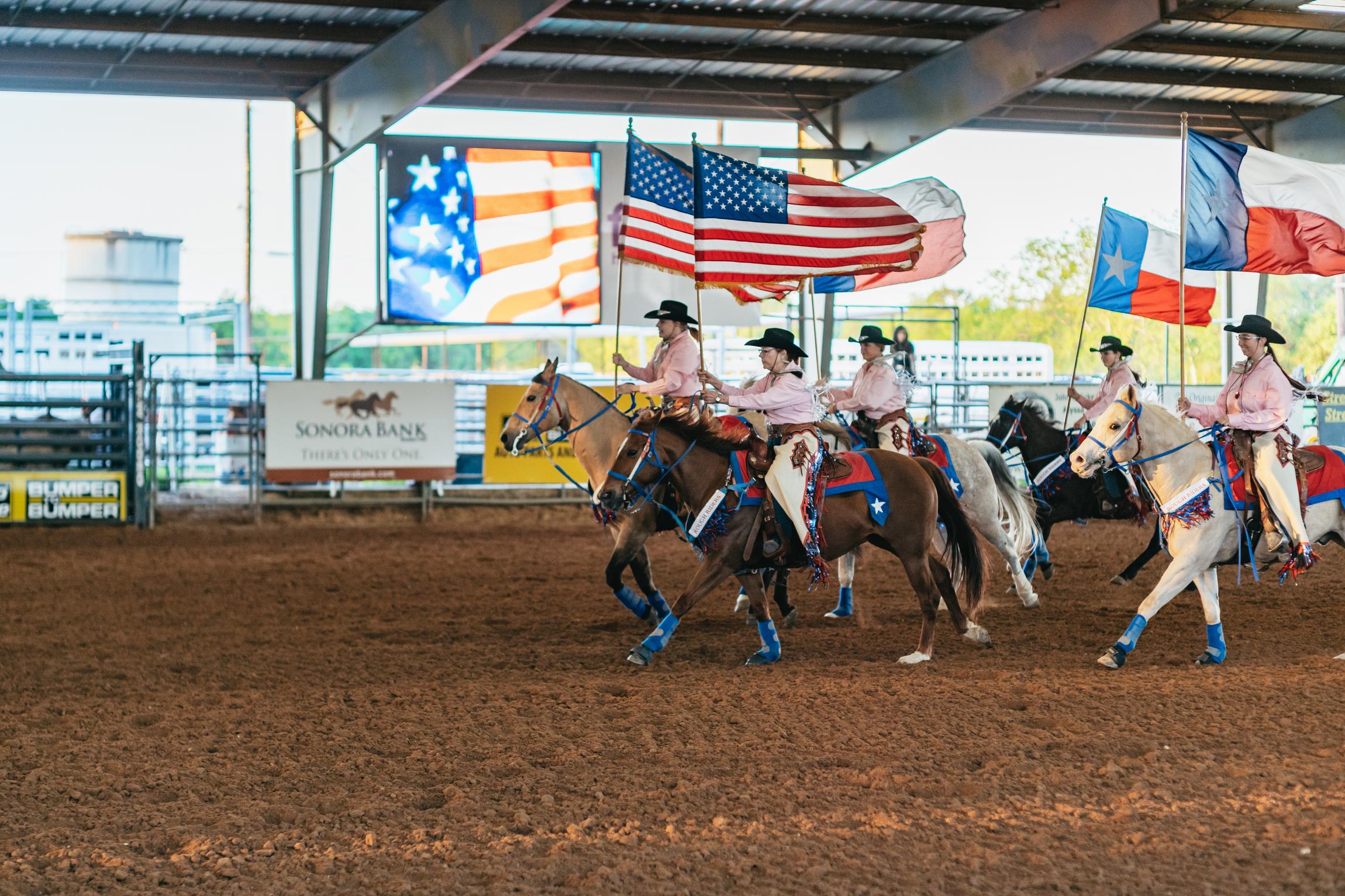
Bulverde Saturday Night Rodeo - General Admission
- Entry ticket
- Mobile voucher
- Valid same day
- Free cancellation
Indian Nose Sunrise Hike from San Marcos Tours — Guided Pre-Dawn Ascents
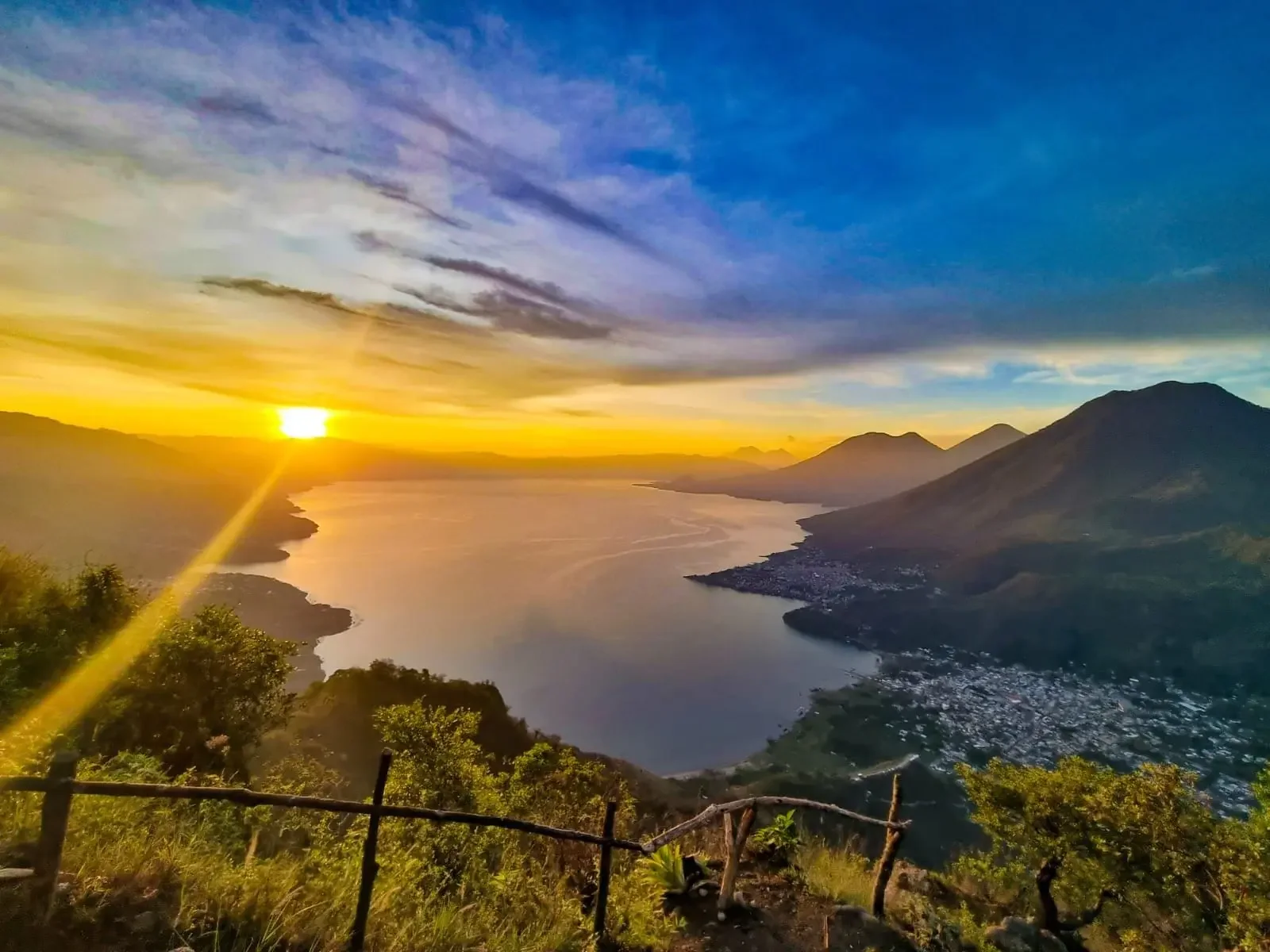
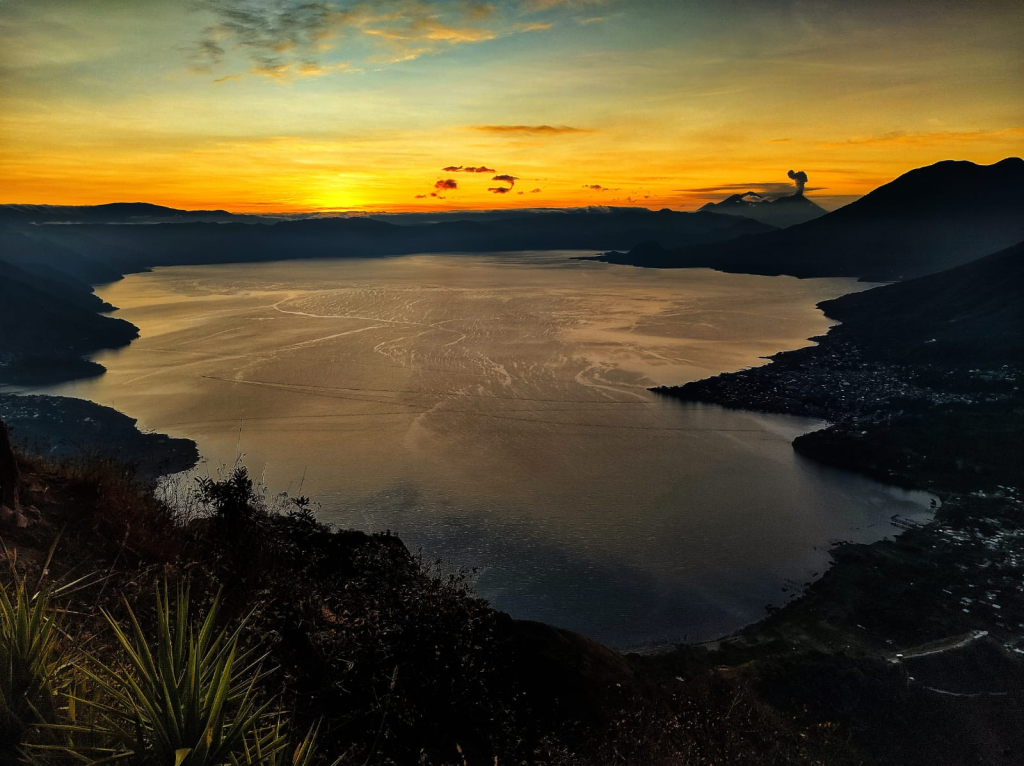
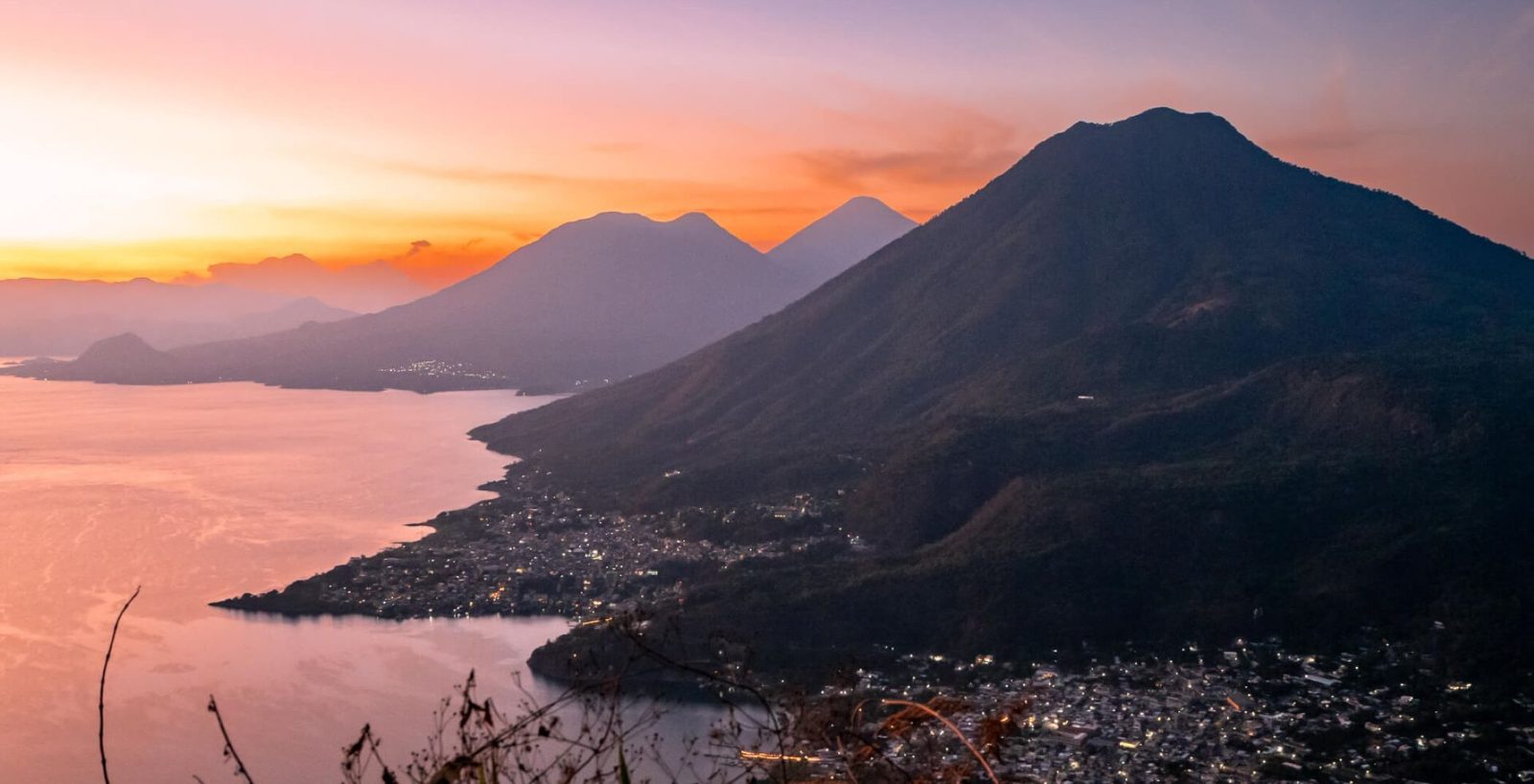
Black water waiting below the ridge, three volcanoes taking the light.
Compare fares, pick the fit — all bookings are mobile-voucher and eligible for free cancellation where shown.
1 hr
7 hr
| Experience | Duration | Rating | Pickup | Skip-the-line | Guide | Free cancel. | Price | |
|---|---|---|---|---|---|---|---|---|
|
Standard Entry
Most popular
Bulverde Saturday Night Rodeo - General Admission
|
Saturday evening event | ★ 4.8 | — | — | — | ✓ | €26 | Book → |
|
Standard Entry
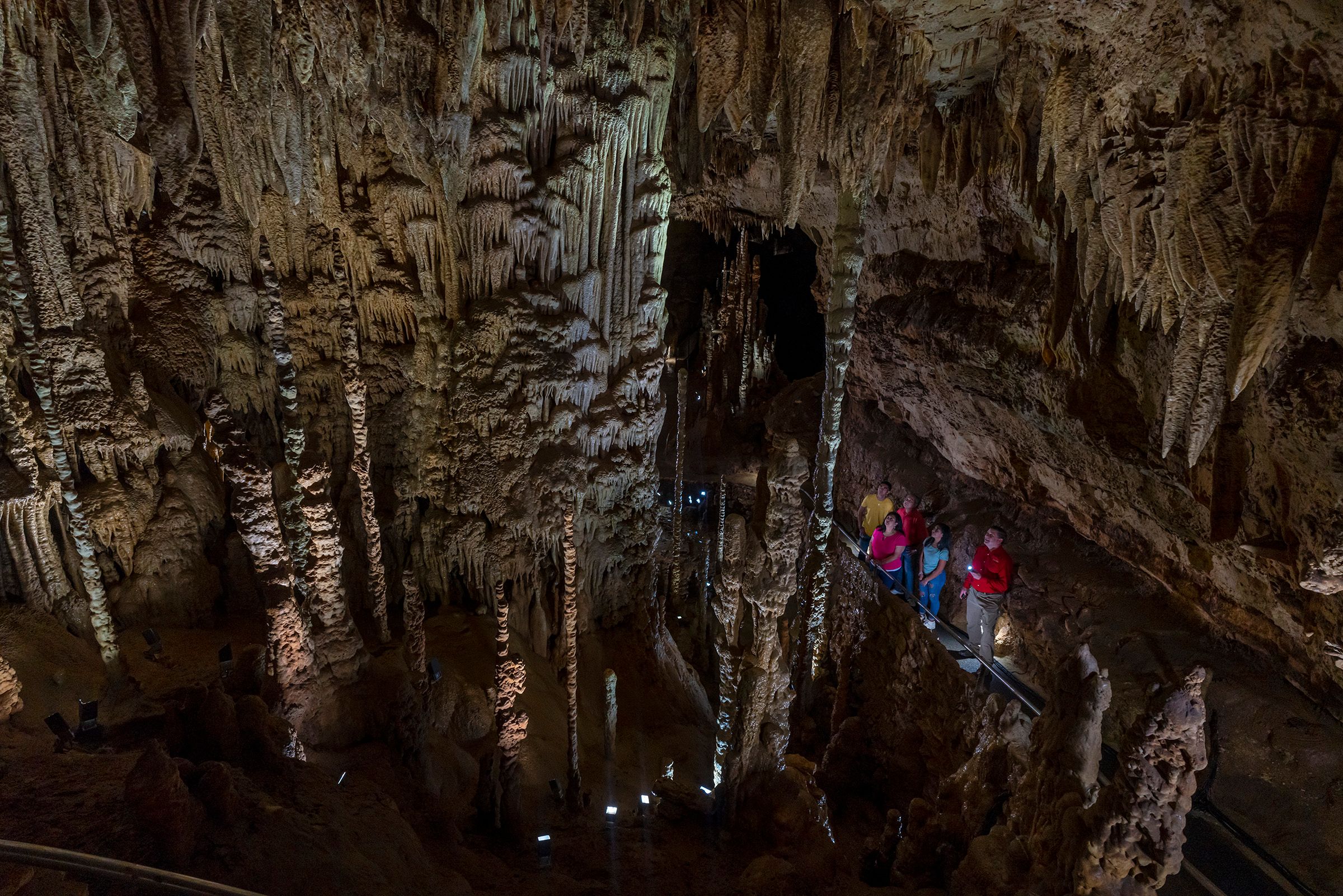
Natural Bridge Caverns: Discovery Tour, San Antonio
|
1 hr | ★ 4.8 | — | — | ✓ | ✓ | €33 | Book → |
|
Guided Experience
Austin to San Antonio Day Trip: Alamo Tour & River Cruise
|
7 hr | ★ 4.9 | ✓ | ✓ | ✓ | ✓ | €220 | Book → |
Worth it for hikers who commit to sunrise
The indian nose sunrise hike from san marcos costs 25 GTQ per foreign visitor at the summit gate, and that fee is not where the real price sits — the sleep is. What 25 GTQ buys is a ridge-top viewpoint over Lake Atitlán with Volcán San Pedro, Tolimán and Atitlán stacked across the water, the kind of panorama that people pay far more for elsewhere in Guatemala. Against that, the exchange rate on effort is steep: a lung-burning climb in the dark, cold summit wind, and a real chance the lake hides under cloud. Nariz del Indio pays off for reasonably fit travellers who want one big Atitlán landmark moment and can absorb a bust morning. It pays off less for anyone travelling on a tight two-day window, hiking with knee trouble, or hoping to sleep in. Guided indian nose sunrise hike from san marcos tours mainly buy you a headtorch-lit escort, not a better view.
Bottom line: If you can handle one broken night and accept the weather gamble, the Nariz del Indio climb is the best value viewpoint on Lake Atitlán — book a spot only if sunrise is genuinely non-negotiable for you.
They complement each other, but most hikers who want a stronger sunrise payoff and a more direct feel call indian nose sunrise hike from san marcos the more rewarding pick. If you want a shorter uphill and an easy San Juan base, Mayan Face is the simpler option.
|
Top pick Indian Nose |
Mayan Face | |
|---|---|---|
| Access point | San Marcos/San Juan side | San Juan La Laguna town summit route |
| Typical hike time | About 1.5–2 hours | About 2 hours |
| Sunrise orientation | Lake Atitlán and volcano views | Lake Atitlán sunrise vantage |
| Guide expectation | Local guide commonly used | Local guide recommended |
| Effort level | Moderate, steeper finish | Moderate, longer approach |
| Who should choose it? | San Marcos base, bigger payoff | San Juan base, simpler ascent |
| See tickets & prices |
Verdict: Choose Indian Nose if you’re based around San Marcos and want the better sunrise-to-effort ratio; choose Mayan Face if you prefer a San Juan-side ascent with a straightforward, guided viewpoint hike.
Hand-picked experiences loved by thousands of travelers
4.5 hours
Free Cancellation
Ride from Austin into Hill Country for legendary Salt Lick BBQ and two winery tastings.
3 hours
Free Cancellation
See San Antonio after dark from a Texas-tallest observation deck, a River Walk cruise, and a lit-up city drive.
1.5–2 hours (including pre- and post-show time)
Free Cancellation
An interactive magic show in San Antonio blending saloon charm, illusion, and live entertainment.
4.5 hours
Free Cancellation
Cruise through Texas Hill Country in a Mercedes van, tasting at 3 award-winning wineries.
3.5 hours
Free Cancellation
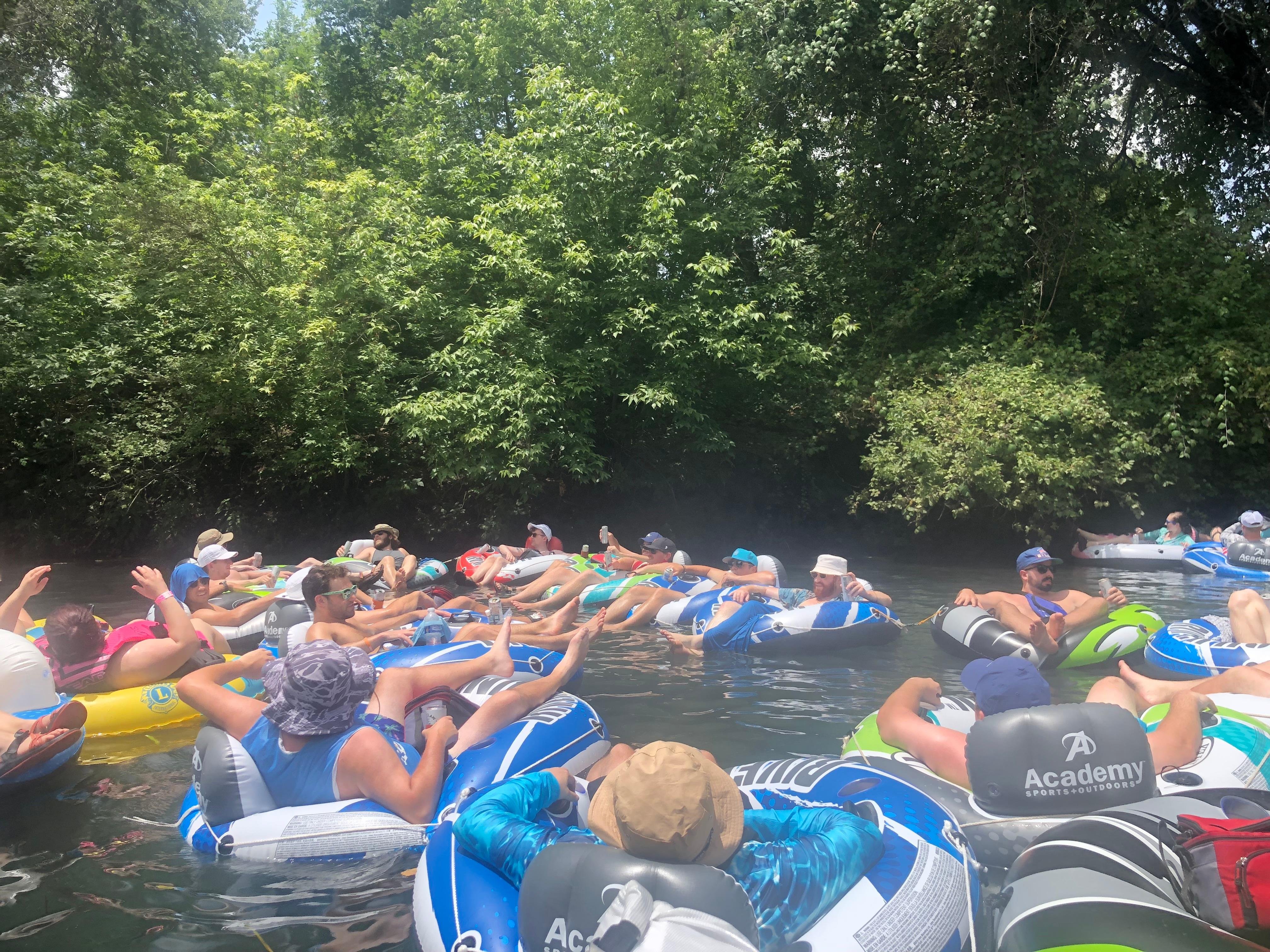
Float the crystal-clear San Marcos River with a guide, cold drinks, and easy Austin transfers.
Flexible – valid any day the zoo is open
Free Cancellation
Explore 8,500+ animals, walk among animatronic dinosaurs, and see gorillas return to Congo Falls.
75 minutes
Free Cancellation
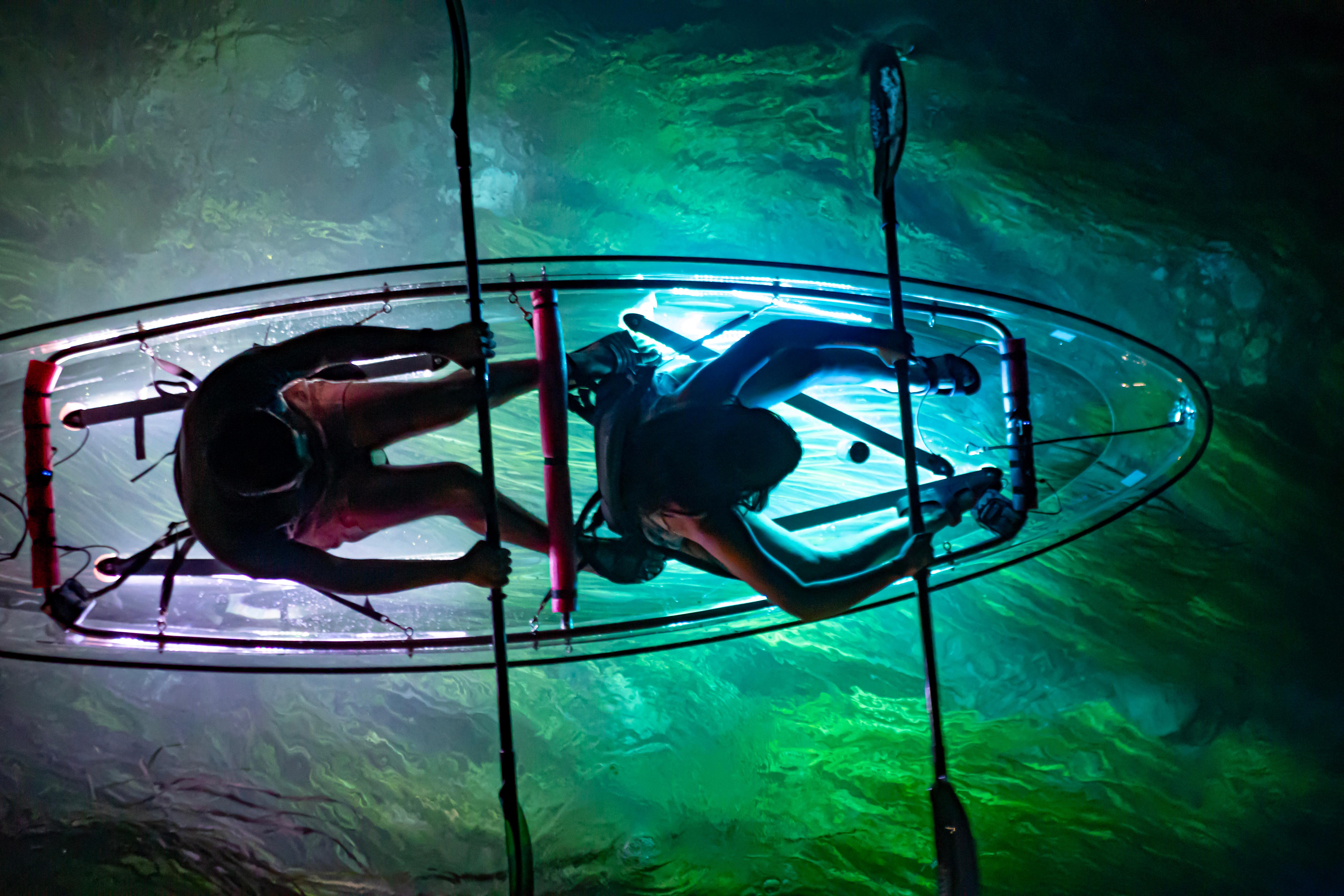
Paddle a see-through, LED-lit kayak after dark and watch the San Marcos River glow beneath you.
2 - 3 hours
Free Cancellation
Small-group ride through Austin's top landmarks and hidden gems in a stylish open-top Bronco.
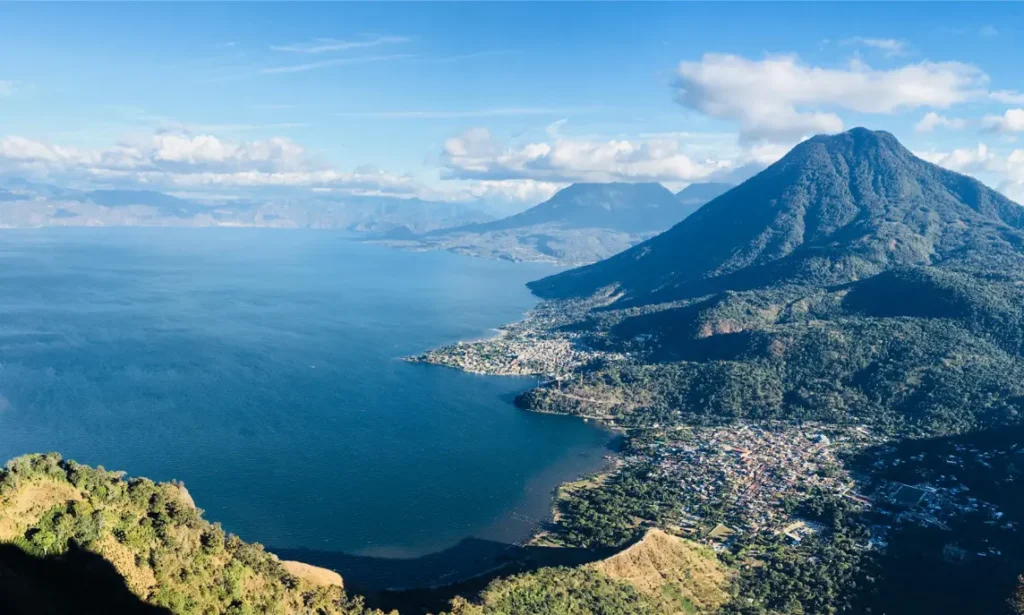
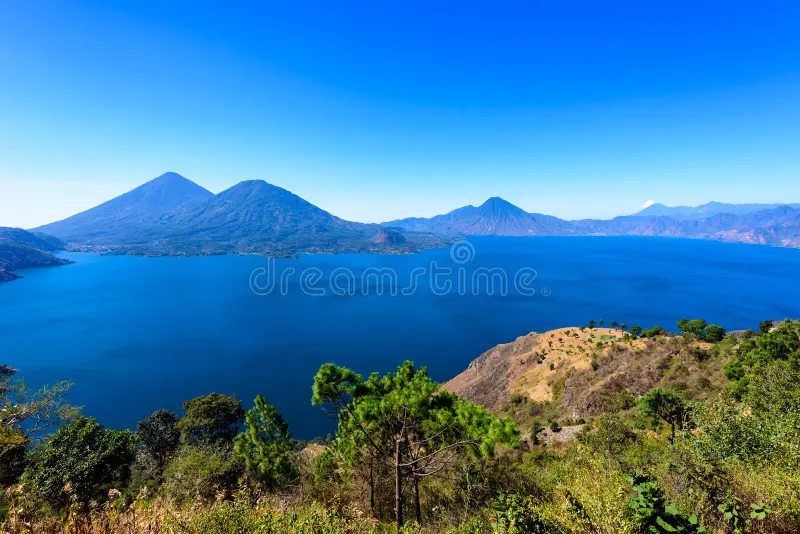
The summit is listed at 2,200 meters above sea level and is described by the official site as the viewpoint’s highest point. From here, you can see Lake Atitlán and the San Pedro, Tolimán, and Atitlán volcanoes, with Acatenango and Fuego visible on clear days.
The official site says you can camp at Cerro K’istalin or start the ascent at dawn to catch sunrise. That makes the ridge important not just as a route, but as a staging point for an early start in low light.
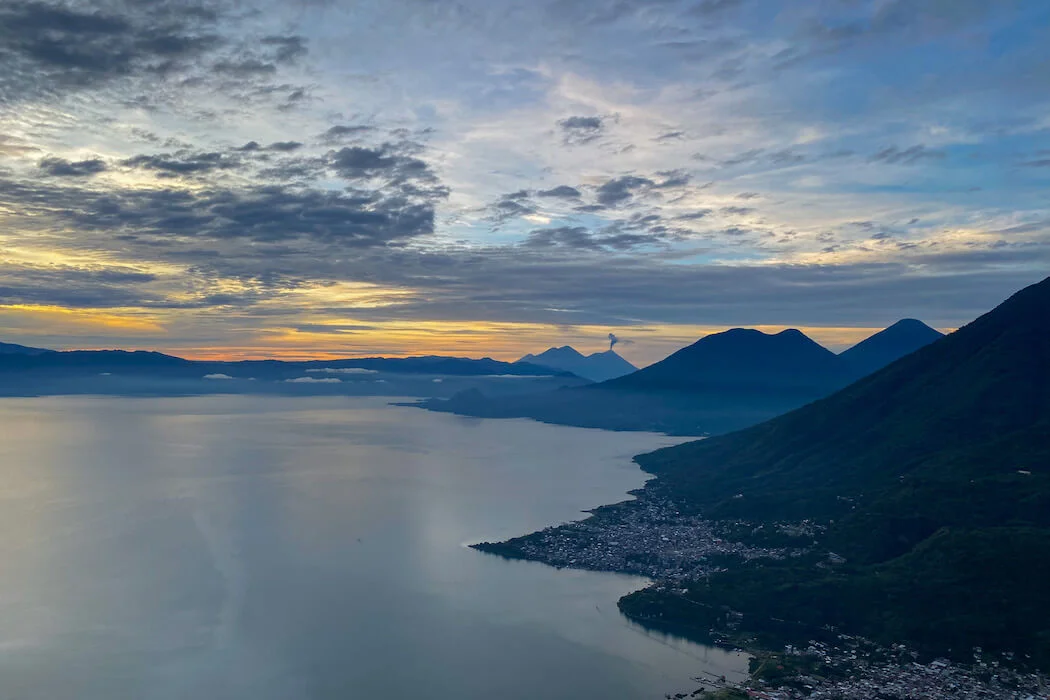
The viewpoint’s main draw is the full basin view across Lake Atitlán. The combination of water, volcanoes, and steep terrain creates the layered horizon that sunrise visitors come for.
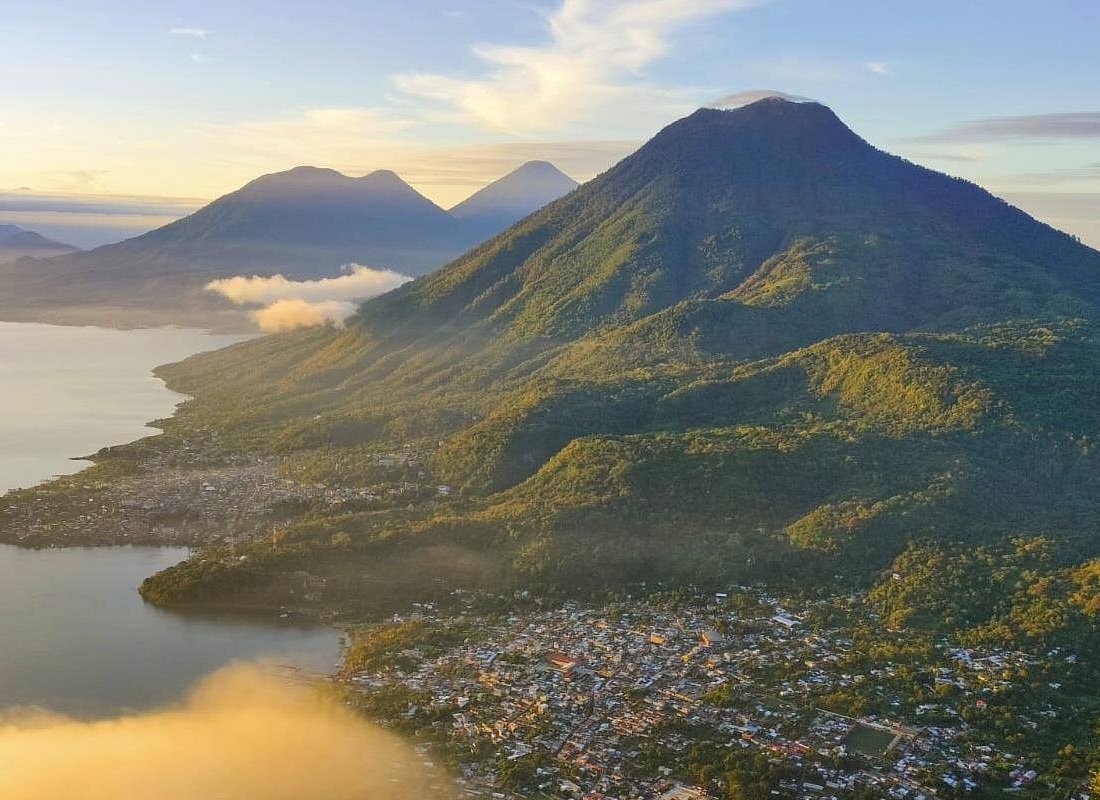
The official site specifically names San Pedro Volcano as one of the peaks visible from the top. This gives the viewpoint a direct line to one of the lake’s most recognizable volcanic cones.
The summit view includes both Tolimán and Atitlán Volcanoes, which helps explain why the ridge reads like a 360-degree lookout. Seeing both cones together is one of the clearest ways to understand the lake’s volcanic ring.
The official page notes that you can also see Acatenango and Fuego from the summit, which is notable because they sit beyond the immediate lake basin. On a clear morning, that long-distance sightline adds scale to the panorama.
You wake before the birds and leave with your headlamp already on. The first stretch is quiet — dust and pine needles underfoot, the beam catching maize stalks at the edge of the fields, a dog somewhere below registering your passage. Your guide sets a slow pace on purpose.
The air here is thinner than the gradient suggests, and the trail stiffens where the pines thin into scrub and loose volcanic grit.
You reach the community gate in the dark, pay in, and take the last switchbacks by feel. Then the ridge arrives all at once, with nothing above you. You find a flat rock, pull on the layer you were told to bring, and stop moving. Below, the caldera is a black bowl rimmed with pinpricks — San Juan, San Pedro, Santa Cruz, the shoreline you left.
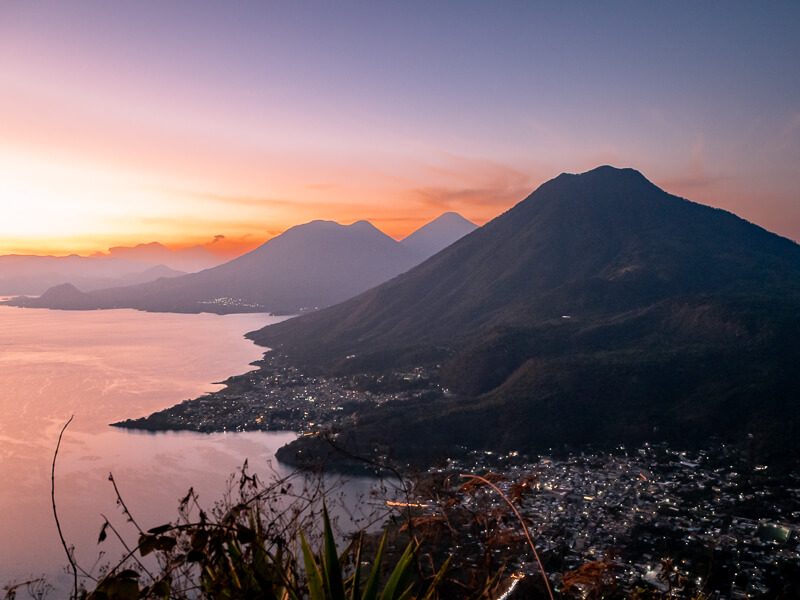
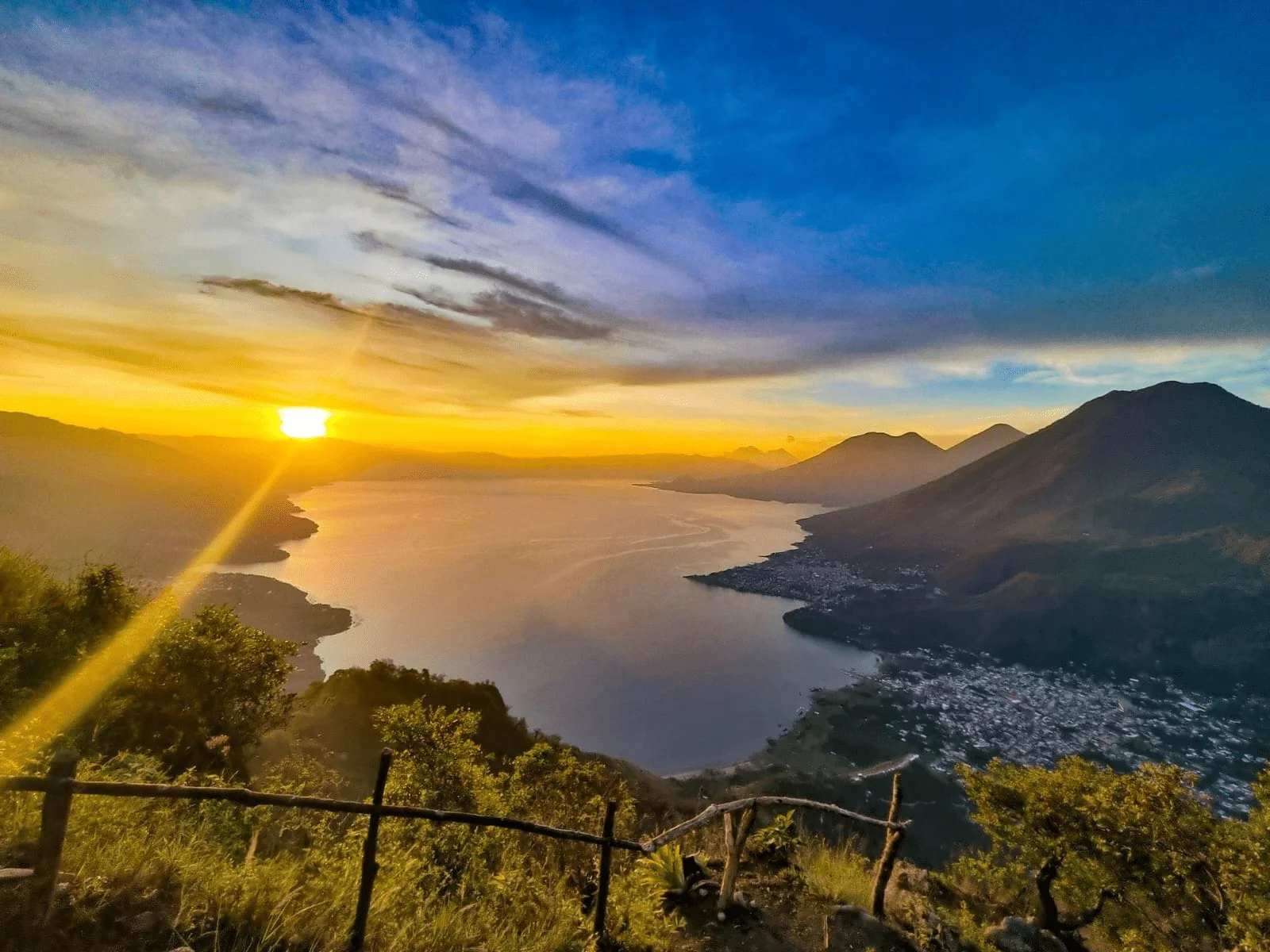
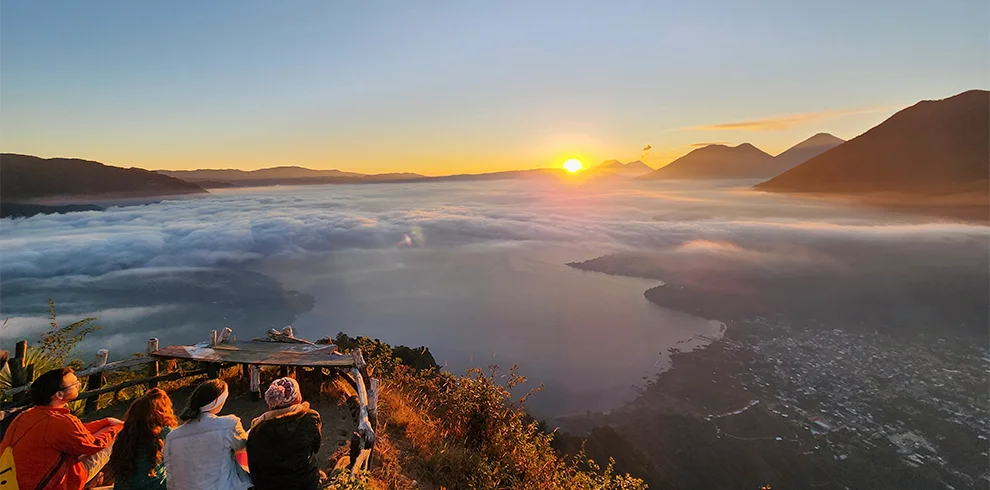
The light does not come all at once. It finds Tolimán first, then Atitlán, then spills west across the water until the lake shifts from slate to tin to blue. An Indian Nose Sunrise Hike from San Marcos tour ends with the descent you could not see on the way up: coffee terraces, a stand of oaks, tin roofs catching the new sun. You go down warmer, slower, and with your hands finally out of your sleeves.
All the details about your upcoming adventure in one place
Seen from the water, the ridge above Santa Clara La Laguna is not a nose at all. The whole skyline reads as a reclining face — forehead, brow, lip and chin — which is why Tz'utujil and K'iche' speakers know it as Rostro Maya long before any guidebook called it Nariz del Indio.
Indian Nose Sunrise Hike from San Marcos tours set out in darkness for a practical reason: the ridge faces east, and the light it was named for lasts about forty minutes.
The lake below is a drowned catastrophe. Los Chocoyos, the eruption that emptied this magma chamber some 84,000 years ago, threw ash far enough that geologists still identify its layer in seabed cores off Florida and Ecuador. The chamber roof collapsed, water filled the hollow, and the caldera rim was left as a ring of steep andesite ridges. Indian Nose is one of those fragments, standing several hundred metres above a lake surface of 1,562 metres. The three cones that dominate the southern shore — San Pedro, Tolimán and Atitlán — are younger, built after the collapse along the caldera's weakened edge.
The summit is community land. Santa Clara La Laguna and San Juan La Laguna administer the viewpoint through their municipal and Indigenous councils, which handle trail upkeep, the entrance gate and the pine forest on the northern flank. Guiding is local work; the people who lead Nariz del Indio ascents generally live in the villages the path crosses. That arrangement has kept the place deliberately plain — a wooden platform, two thatched shelters, a scattering of benches, no road to the top, no restaurant.
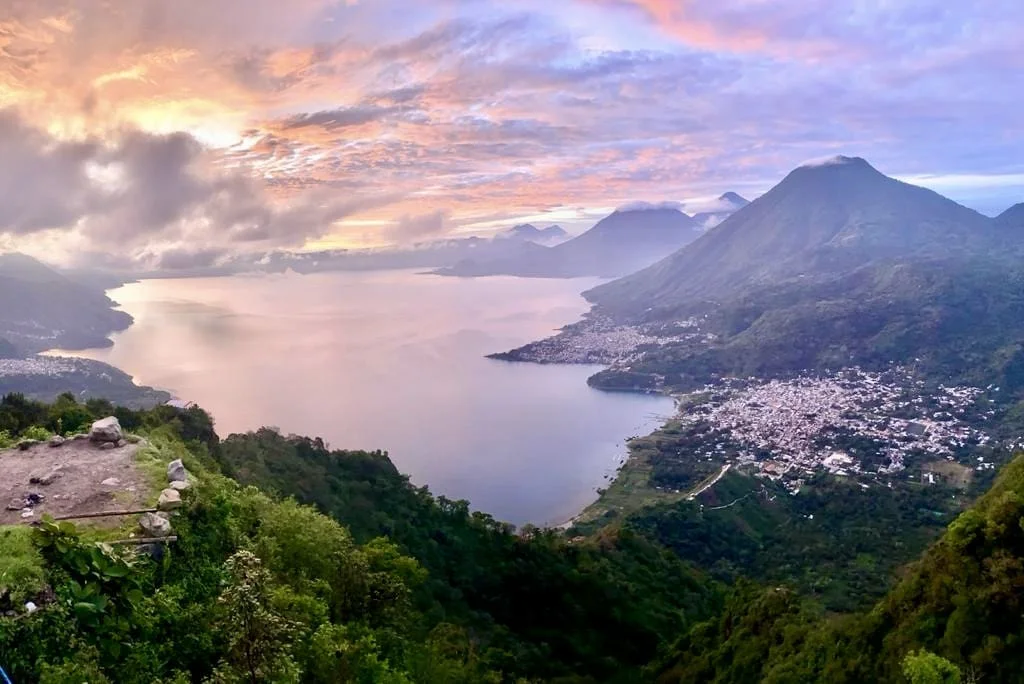
What the ridge offers is orientation. From the platform the basin resolves into something legible: a dozen shoreline villages, the Panajachel delta pushing into the water, the Sierra Madre stacked behind in receding blue. Temperature inversion often pools cloud in the caldera overnight, so the volcanoes surface as islands and the lake disappears entirely until mid-morning burns it off. On the clearest days the plume of Fuego is visible some sixty kilometres east. Indian Nose Sunrise Hike from San Marcos tickets cover entry to that rim and little else — the rest is weather, altitude and patience, which is roughly what the Lake Atitlán viewpoints have always asked of anyone willing to climb before dawn.
The ridge does not present a view so much as an explanation: the caldera, all at once, made legible.
Wear warm layers, a windproof jacket, and sturdy hiking shoes. The official site recommends a coat and climbing shoes for the ascent to the Mayan Face, and dawn can be cold above Lake Atitlán.
Carry only a small day pack so you can move safely on the steep trail. Local guides are commonly recommended for route finding and access coordination because the approach crosses community land.
Photography is allowed and the official site highlights sunrise and lake views from the summit. Bring a charged camera or phone, but keep it secured on steep sections where footing is uneven.
Families with older children usually do better than those with toddlers because the trail is steep and early starts are cold. San Juan La Laguna’s official tourism pages also describe the viewpoint as a sunrise outing, so the schedule is best for children who can hike before dawn.
Indian Nose is not wheelchair accessible and the approach is a strenuous uphill hike. The official site notes an ascent of about 2 hours from San Juan La Laguna, while guided sunrise products also use shorter trailhead approaches from Santa Clara La Laguna.
Bring water and light snacks, as the official site specifically suggests hydration, fruit bars, and light bread for breakfast at the viewpoint. Food stalls are not part of the mountain trail itself, so plan to eat before or after the hike in San Juan La Laguna.
Hours
Open daily 00:00–23:59
Address
Indian Nose, near Santa Clara La Laguna and San Juan La Laguna, Sololá, Guatemala
Access
Steep mountain trail; guide strongly recommended
Best arrival
04:00–05:30 — Arrive before sunrise and crowds
Contact
+502 4715-3770
If your booking includes a cancellable tour product, free cancellation is typically available up to 24 hours before the start time on many live listings. The 25 GTQ foreign-visitor entrance fee is separate from tour cancellation terms and is usually non-refundable once paid on site.
Recommended time
2-3 hours
For an indian nose sunrise hike from san marcos, plan on about 2-3 hours total for the hike, viewpoint time, and the return, with the walking portion often taking around 2 hours from San Juan La Laguna-area trail access. To hit the best-arrival window of 04:00–05:30, many hikers should leave San Marcos roughly 45-75 minutes earlier, depending on how you get to the trailhead and how fast you move uphill. The pre-sunrise slot is usually the calmest; crowd flow peaks around sunrise, then thins fairly quickly after the first light. If you want a slower pace or more time at the summit ridge, add 30-45 minutes.
Crowd levels through the day
The ridge sold today under the banner of indian nose sunrise hike from san marcos tours is older than any story told about it. Roughly 84,000 years ago the Los Chocoyos eruption emptied a vast magma chamber and left the caldera that Lake Atitlán now fills. The ridge above Santa Clara La Laguna survived as a fragment of that rim. Seen from the water, its profile reads as a face lying on its back — the oldest of Sololá's landmarks. The Tz'utujil Maya held the southern shore long before Pedro de Alvarado subdued their capital at Chuitinamit in 1524. Their descendants in San Juan La Laguna and San Pedro La Laguna still call the formation Rostro Maya, the Maya Face. 'Nariz del Indio' came later, a colonial shorthand for one feature of that profile. Both names remain in circulation, and the choice between them is not a neutral one. Foreign attention arrived slowly. Aldous Huxley described the lake in Beyond the Mexique Bay in 1934 as 'too much of a good thing,' and the phrase followed Atitlán for decades. In 1955 Guatemala protected the basin as Parque Nacional Lago de Atitlán. Then came the armed conflict of 1960 to 1996, which emptied the highlands of travellers and returned the ridge path to farmers. Anyone joining an indian nose sunrise hike from san marcos tour now walks a route effectively reopened by the December 1996 Peace Accords. Recovery was interrupted. Hurricane Stan buried hillsides across Sololá in October 2005. In 2018 INGUAT named San Juan La Laguna a Pueblo Mágico, and associations in Santa Clara formalised guiding on the summit. That structure holds in 2026: village guides, a community-managed mirador, and indian nose sunrise hike from san marcos tickets that keep the ridge in local hands.
The Los Chocoyos eruption collapsed a magma chamber and formed the caldera now occupied by Lake Atitlán.
Pedro de Alvarado defeated the Tz'utujil at their capital of Chuitinamit, ending independent rule on the lake's southern shore.
Aldous Huxley published Beyond the Mexique Bay, calling Atitlán 'too much of a good thing' and fixing its reputation abroad.
Guatemala declared the basin Parque Nacional Lago de Atitlán, bringing the surrounding ridges under formal protection.
Armed conflict across the highlands suppressed travel, and the ridge served farmers rather than visitors until the December 1996 Peace Accords.
Hurricane Stan struck in October, triggering landslides across Sololá and cutting lake communities off from tourism for months.
INGUAT named San Juan La Laguna a Pueblo Mágico, and community associations formalised guiding on the Rostro Maya ridge.
The viewpoint remains under community management, with village guides leading the pre-dawn ascent year-round.
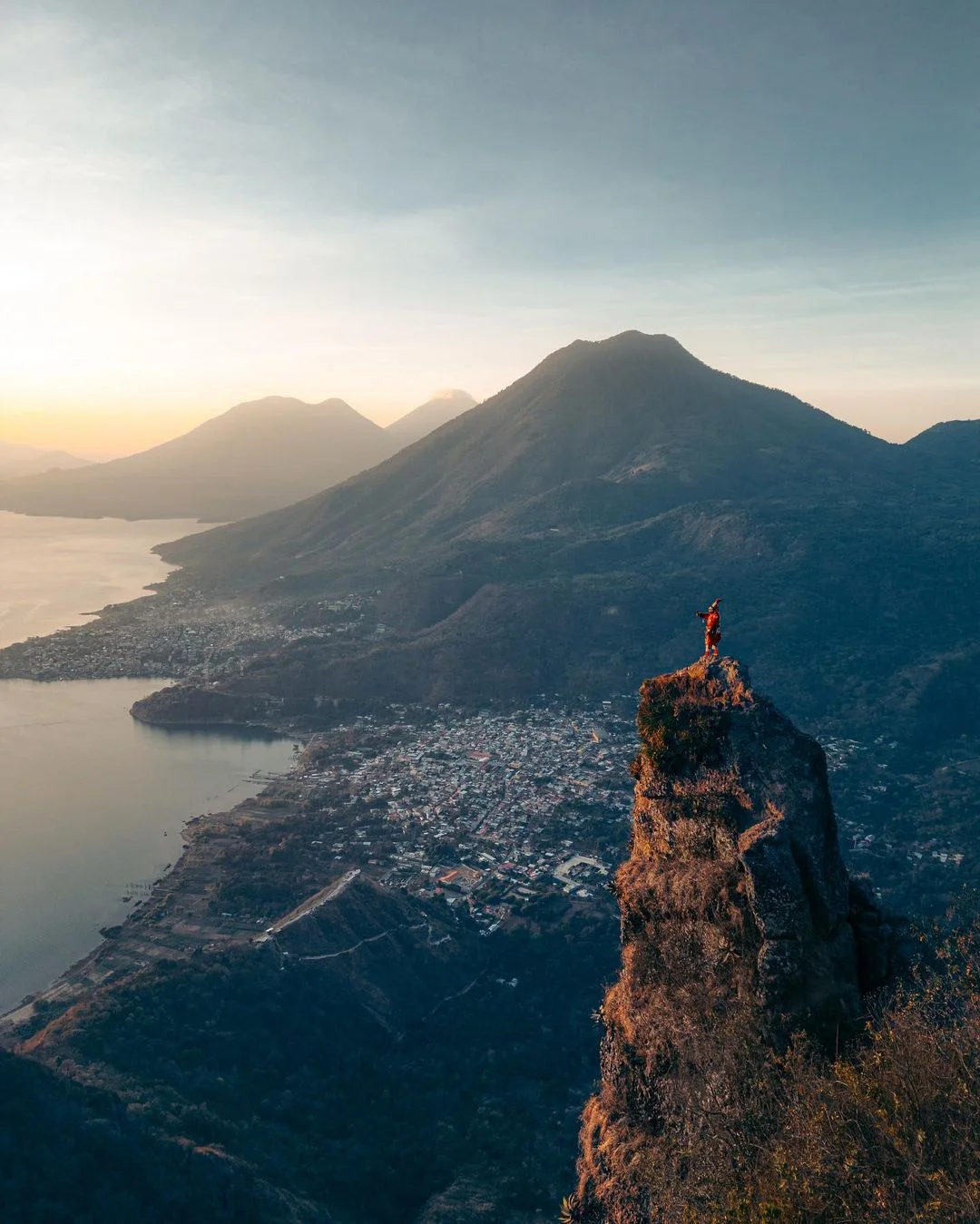
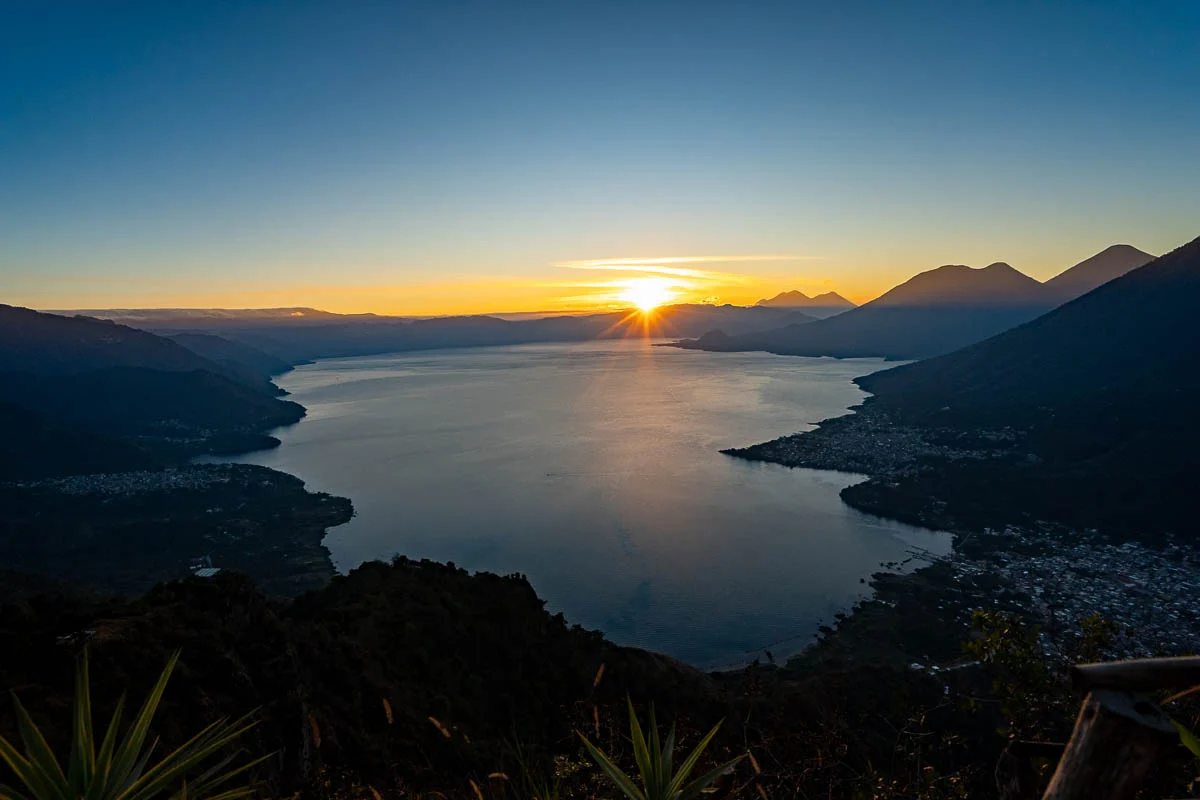
Stand on the exposed top crest where the full Lake Atitlán basin opens up in front of you. This is the cleanest wide shot for the indian nose sunrise hike from san marcos, with the lake, San Pedro, Tolimán, and Atitlán volcanoes layered behind the ridge. Keep your framing low and horizontal for a classic sunrise panorama.
Shoot from the first bend where the trail breaks out of the trees and the lake appears for the first time. Use this spot for a reveal composition with the foreground ridge curving toward the water, then let the volcano line sit above the horizon for depth.
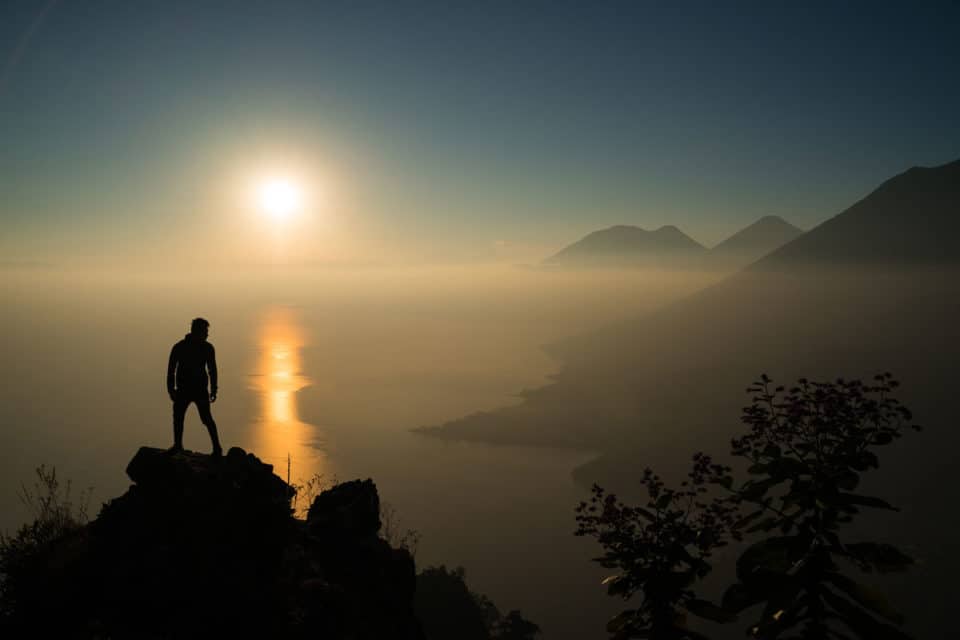
Move to the edge of the ridge and shoot people as silhouettes against the brightening sky. This angle works best with a side profile of the crest, giving you a strong shape of the hikers and a clean sunrise sky behind them.
Turn toward the volcano chain and frame the peaks through a narrow section of the ridge. This composition is strongest when clouds sit low over the lake, because it separates the volcano faces from the water and gives the shot more texture.
Use the main lookout where the sun first clears the horizon to catch the brightest color shift. The shot works well if you step slightly back from the edge so the ridge stays in the lower frame and the sky carries the color transition.
The indian nose sunrise hike from san marcos can work for families with older kids, but it is an early, uphill outing with a very simple summit setup. There is no stroller-friendly route here, so plan on carriers for little ones and a steady pace for the climb.
Do not plan to bring a stroller; the hike is steep and uneven, so a carrier is the practical choice for younger children. Start early enough to reach the viewpoint before sunrise and avoid the biggest crowd build-up.
Best for kids who can walk confidently on a mountain trail and handle an early start. If you are mixing ages, keep the group small and set slower rest stops so the indian nose sunrise hike from san marcos stays manageable.
Expect a basic trail experience rather than visitor-center comforts. I could verify the official site, address, phone, hours, and entrance fee, but I found no confirmed baby-change facilities or family ticket option.
Keep the climb slow and let children pause for water and layering breaks, because the pre-dawn cold and altitude can make the final stretch feel harder. The reward is clear dawn views over Lake Atitlán and the surrounding volcanoes.
Bring snacks and drinks with you, since food service on the trail is not something I could verify from official sources. For a family day, pair the indian nose sunrise hike from san marcos tour with a quiet breakfast back in town.
The verified entrance fee is 25 GTQ per foreign visitor, and the official site is https://sanjuanlalaguna.com.gt/. If you need help confirming access details before you go, the listed phone is +502 4715-3770, which is useful when checking indian nose sunrise hike from san marcos tickets.
For the indian nose sunrise hike from san marcos, most hikers eat before dawn in San Juan La Laguna and then keep breakfast simple after the climb. There is no real on-site dining at Indian Nose, so the practical plan is a café stop in town rather than trying to eat at the trailhead.
Good for organic coffee before the indian nose sunrise hike from san marcos and a light post-hike stop. The coffee tour site is a comfortable place to rest, and it works well if you want a calm, early-morning cup rather than a full meal.
A straightforward coffee stop on the shore, best for a quick breakfast drink before the climb. It can be busy around the morning rush, so it suits travelers who want something fast rather than a long sit-down.
Useful for a fuller breakfast after the sunrise hike, with a menu that pairs well with the lake area pace. It is a good fit for hikers who want coffee plus a proper plate before heading back, and it can feel busy when boats and tours are moving.
A seated option if you want a more substantial late breakfast or early lunch after the indian nose sunrise hike from san marcos tour. The menu leans Italian, so it is better for a relaxed meal than a grab-and-go stop.
A broader local-food choice for travelers coming off the hill, especially if you want typical dishes in a casual setting. It is easier to use for a post-hike meal than for a pre-dawn departure.
Everything you need to know for your journey
Indian Nose is listed as open every day from 00:00 to 23:59. The practical sunrise visit happens before dawn, but the site itself has no daily closing hours on the canonical facts provided here. The foreign-visitor entrance fee is 25 GTQ per person. That fee is the on-site admission truth for Indian Nose and should not be confused with any separate tour price. The best arrival window is 04:00–05:30, which gives you time to reach the summit before sunrise and before the busiest crowd window. That recommendation is specific to Indian Nose and comes directly from the canonical facts. No wheelchair-accessible route is indicated for Indian Nose, and the climb is steep. If accessibility is a concern, plan for a guided vehicle transfer to the trailhead and then assess the final ascent carefully. Wear warm layers and hiking shoes, because dawn conditions are cool and the trail is uneven. The official San Juan La Laguna page also recommends a coat and climbing shoes for the Mayan Face hike. Bring a small pack with water, snacks, and cash in GTQ. The official site explicitly suggests hydration and light breakfast items, while large or bulky bags are impractical on the steep approach. Yes, photography is part of the experience, and the official site highlights sunrise viewing and panoramic lake scenes. Keep your camera secured on narrow sections and avoid blocking the path while you shoot. From San Marcos La Laguna, the common route is to connect by local road or arranged transfer to Santa Clara La Laguna, then continue on foot to the viewpoint trail. Reliable tour listings also state that San Marcos La Laguna is one of the pickup points for Indian Nose sunrise hikes. It can work for children who are used to early starts and hillside walking, but the route is not a casual promenade. The cold pre-sunrise start and steep finish make it better for older children than for very young kids. Many live tour products offer free cancellation up to 24 hours before departure, but that policy applies to the specific booked tour, not the trail fee itself. The 25 GTQ entrance fee is separate and should be treated as an on-site admission cost. Nearby Lake Atitlán pairings include the Kaqasiiwaan Viewpoint, Paseo de las Artes, the Street of Hats, local coffee tours, and the Catholic Church in San Juan La Laguna. These are all part of the same town network and are practical add-ons after the hike.

Please contact us for more information.
Join thousands of happy travelers who have discovered this incredible experience
Book Your Experience Now