

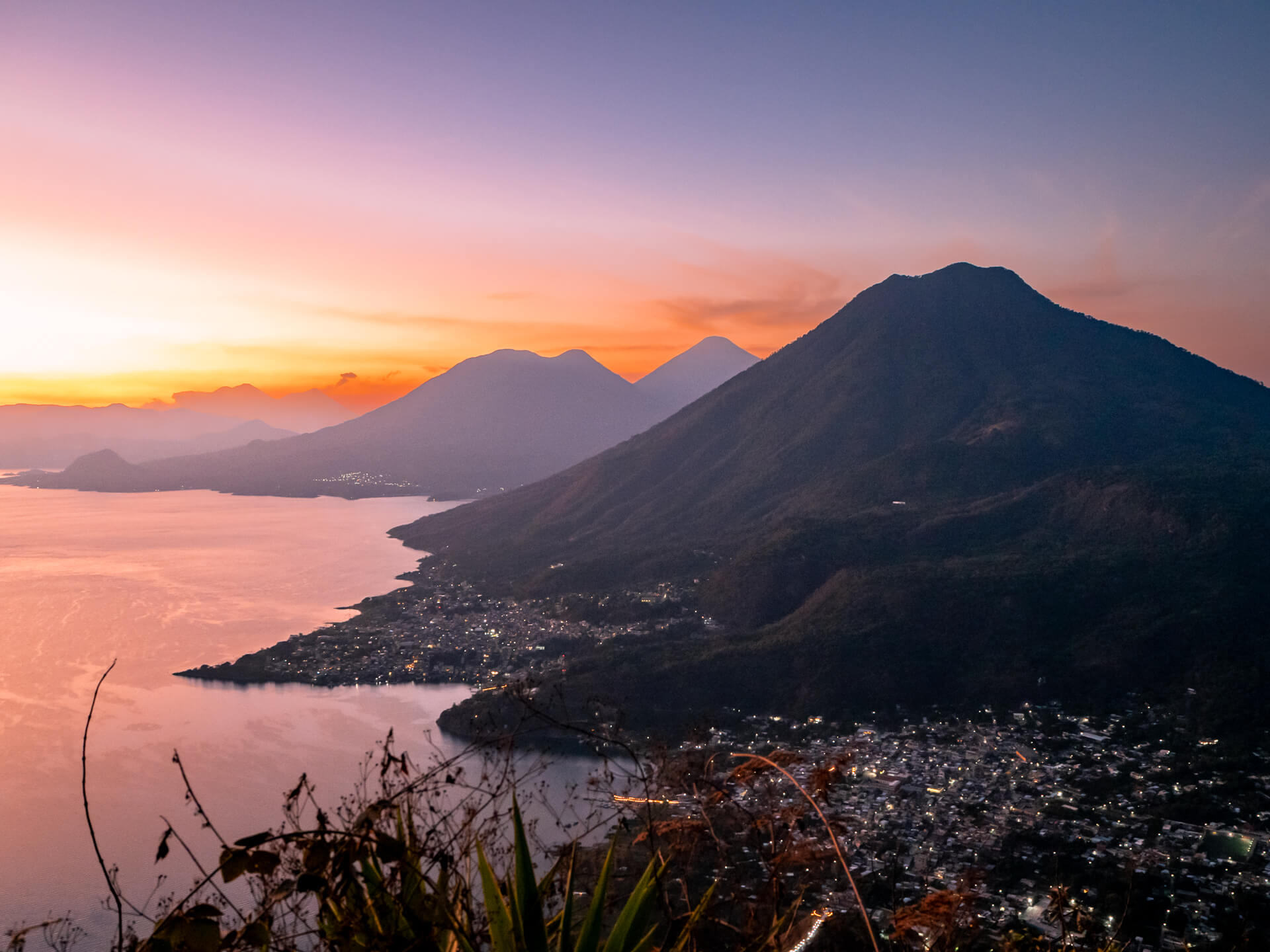
Quick answer
Plan to reach the viewpoint between 04:00 and 06:00 to watch the sunrise over Lake Atitlán. Entry costs 50 GTQ per person, and the viewpoint at Rostro Maya, San Juan La Laguna, is accessible 00:00–23:59 every day of the week. The arrival window matters more than the hours: cloud builds through the morning, and latecomers often meet a filled basin instead of an open lake.
The mountain most travellers call Indian Nose is known locally as Rostro Maya — the Maya Face — and the name is literal. Seen from the water near Santa Cruz, the ridgeline reads as a reclining profile: forehead, bridge, chin. Villagers of San Juan La Laguna and Santa Clara have described the formation this way for generations, long before it became a stop on the Lake Atitlán circuit. Anyone reading an indian nose sunrise hike guide should understand that the summit is not a neutral lookout but a ceremonial site, and that Maya altars remain in use on the upper slopes. What the reader is actually dealing with is a short, steep ascent undertaken in darkness, from a village that has organised access on its own terms. The viewpoint is not gated by a schedule; the address is Rostro Maya, San Juan La Laguna, Sololá, and access runs 00:00–23:59, seven days a week. That openness is misleading. The real constraint is meteorological. Lake Atitlán sits in a collapsed caldera roughly 1,560 metres above sea level, ringed by the cones of San Pedro, Tolimán and Atitlán. Cold air settles overnight and lifts as the sun warms the basin, so the clearest conditions belong to the first hour of light and dissolve quickly afterwards. By mid-morning the volcanoes are often gone behind cloud. This is why every serious Rostro Maya trekking write-up converges on the same instruction: be in position between 04:00 and 06:00. That window is not about beating crowds. It is about being on the ridge while the caldera is still cold and the horizon behind the eastern volcanoes is still sharpening. Arriving after it means climbing the same slope for a materially worse view. What to do with that answer is straightforward. Work backwards from the arrival window when choosing a departure time, and treat every other decision — access route, footwear, whether to walk with a local guide from San Juan or Santa Clara — as downstream of it. The community fee collected at the viewpoint is modest and funds local upkeep; a good indian nose sunrise hike guide guide treats it as a fixed cost rather than a variable to optimise. Budget more attention to conditions than to logistics. Between June and October the basin sits inside the rainy season, which produces both the worst mornings and, occasionally, the most dramatic ones. Guatemala highland viewpoints reward patience and flexible dates. Readers with only one morning to spend should take the earliest end of the window and accept that the lake, like the face it is named for, does not perform on request.
“The mountain is open at every hour, yet only one of them is worth climbing for.”
Optimal Timing: Indian Nose Sunrise Hike Guide
The optimal time to experience the Indian Nose sunrise hike is between November and February, when the morning skies are clearest. Arriving at the summit viewpoint during the recommended 04:00–06:00 window guarantees you will witness the sun rising over Lake Atitlán with minimal cloud cover.
November to February
Peak visitor numbers on weekendsCold mornings, 8°C to 12°C
This period offers the highest atmospheric clarity and the sharpest volcanic views. The morning air remains crisp before daytime warming begins.
March to April
Moderate to high trafficHazy mornings, 12°C to 15°C
Seasonal agricultural burning generates a persistent haze that can reduce long-distance visibility across the caldera. Mornings are warmer but dry.
May to October
Lower visitor countsHumid mornings, 14°C to 16°C
Rainy season brings heavy afternoon storms, but early mornings often start clear. Fog can occasionally block the viewpoint entirely.
Weekday mornings
Quietest experience with fewer hikers—
Climbing during the week avoids the larger tour groups that ascend from nearby villages. This makes it easier to secure a prime viewing spot at the peak.
Verdict: Tuesday to Thursday, arriving at the viewpoint between 04:00–06:00, from November to January.
Trailhead Access: Indian Nose Sunrise Hike Guide
The iconic Rostro Maya, commonly known as Indian Nose, towers over the western shores of Lake Atitlán in the Sololá region of Guatemala. The most straightforward approach for the popular sunrise trek begins in the high-elevation town of Santa Clara La Laguna, while a much steeper, longer path ascends directly from the lake-level village of San Juan La Laguna.
Shared traveler shuttle from San Pedro La Laguna hotels to Santa Clara La Laguna trailhead
Local tuk-tuk from San Marcos La Laguna central square to Santa Clara La Laguna trailhead
Public lancha ferry from Panajachel Tzanjuyu Dock to San Juan La Laguna main dock
Direct climbing trail from Mirador Kaqasiiwaan in San Juan La Laguna to Rostro Maya summit
Permit Costs: Indian Nose Sunrise Hike Guide
Hikers ascending Rostro Maya must navigate a system of cash-only payments that are collected directly by local municipalities and private landowners. Total admission costs hinge on your starting point, as different routes cross distinct community boundaries.
An adult typically pays a baseline of 50 GTQ for viewpoint entry, though the final cost fluctuates depending on which trailhead you select and whether you encounter landowners charging for passage.
Route Comparison: Santa Clara vs. San Juan
When planning your ascent to the Rostro Maya summit, you must decide between two primary trails. The standard route departs from Santa Clara La Laguna, avoiding most elevation gain via road transport, while the direct route from San Juan La Laguna climbs straight up the mountainside from Lake Atitlán.
|
Top pick Santa Clara Route Short and popular sunrise option |
San Juan Route Challenging and steep lake-level climb | |
|---|---|---|
| Starting Point | Santa Clara La Laguna trailhead next to the cemetery | San Juan La Laguna trailhead at the northern edge of town |
| Trail Length | 2.7 kilometers (1.6 miles) round-trip | 7.9 kilometers (4.9 miles) round-trip |
| Elevation Gain | 124 meters (407 feet) from trailhead to summit | 769 meters (2,523 feet) from town to summit |
| Hiking Duration | 30 to 45 minutes to ascend (1.5 hours total) | 1.5 to 2 hours to ascend (3.5 hours total) |
| Difficulty | Moderate with a short, steep final push | Challenging with a continuous, steep climb |
| Best For | Convenient sunrise viewing and tour groups | Independent hikers seeking a demanding physical workout |
Verdict: Most travelers prefer the Santa Clara route to reach the viewpoint easily before dawn, whereas experienced hikers looking for a strenuous physical workout during the day should select the challenging San Juan path.
Summit Viewpoints: Indian Nose Sunrise Hike Guide
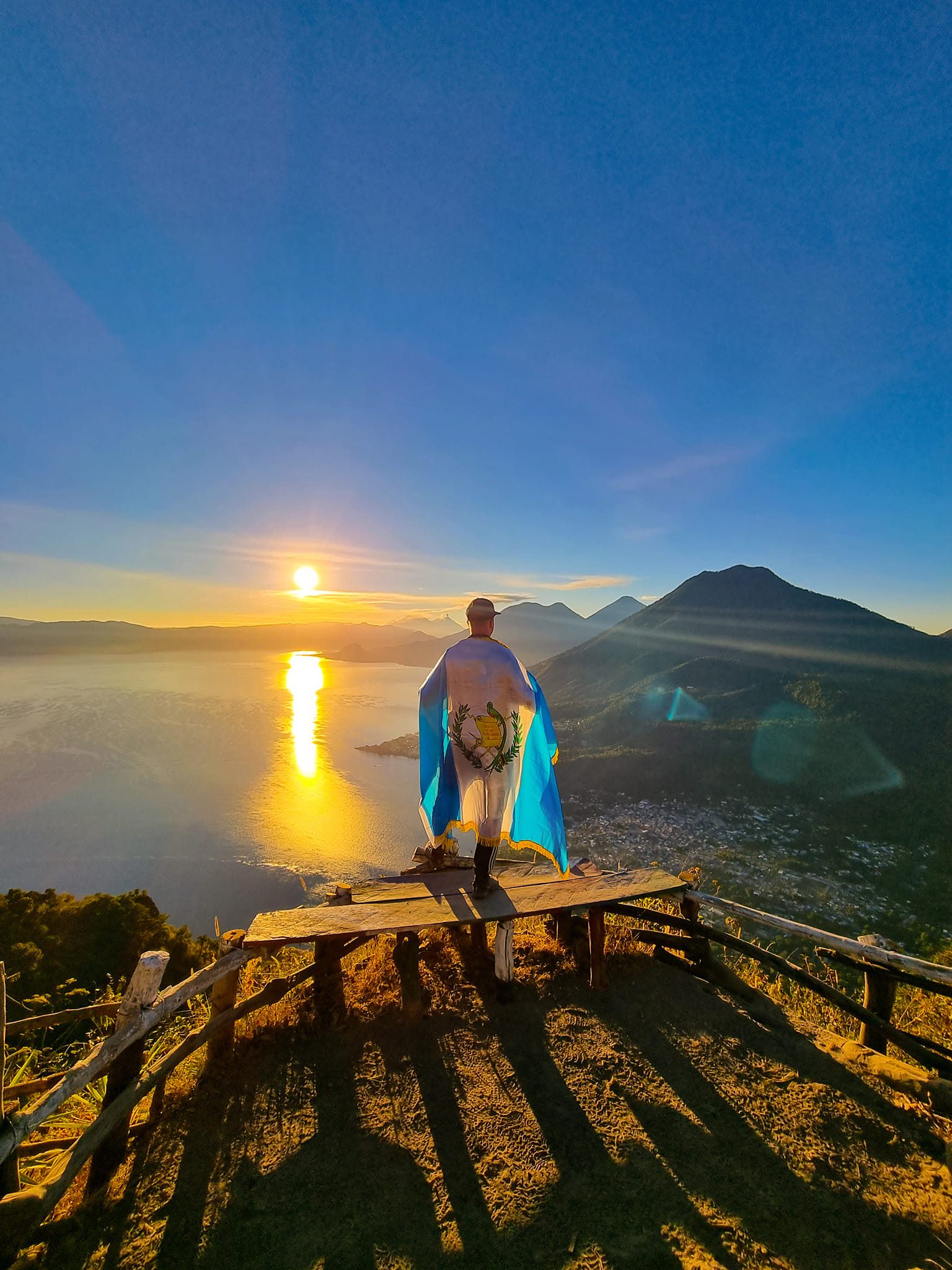
Lower Wooden Platform
This sheltered structure offers a framed view of the lake surface reflecting the early dawn colors. Position your camera to capture the wooden railings leading toward the volcanic silhouettes in the background.
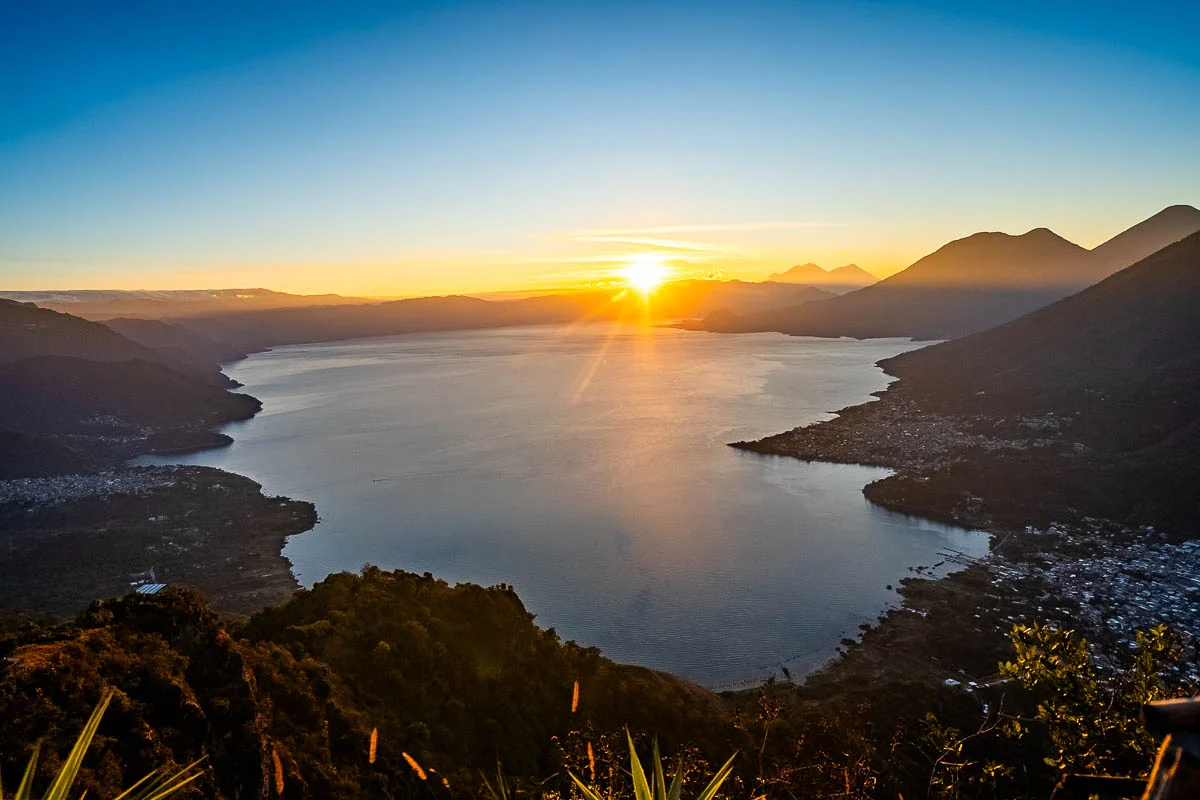
Indian Nose Summit Peak
The highest vantage point provides an unobstructed panorama of the three major volcanoes. Aim your lens eastward to catch the sun emerging behind Volcan Toliman and Volcan Atitlan.
The Beak Rock Feature
A rocky outcrop near the peak allows for dramatic profile shots of the cliff face against the water. Use a wide-angle lens to include both the sheer drop and the distant villages below.
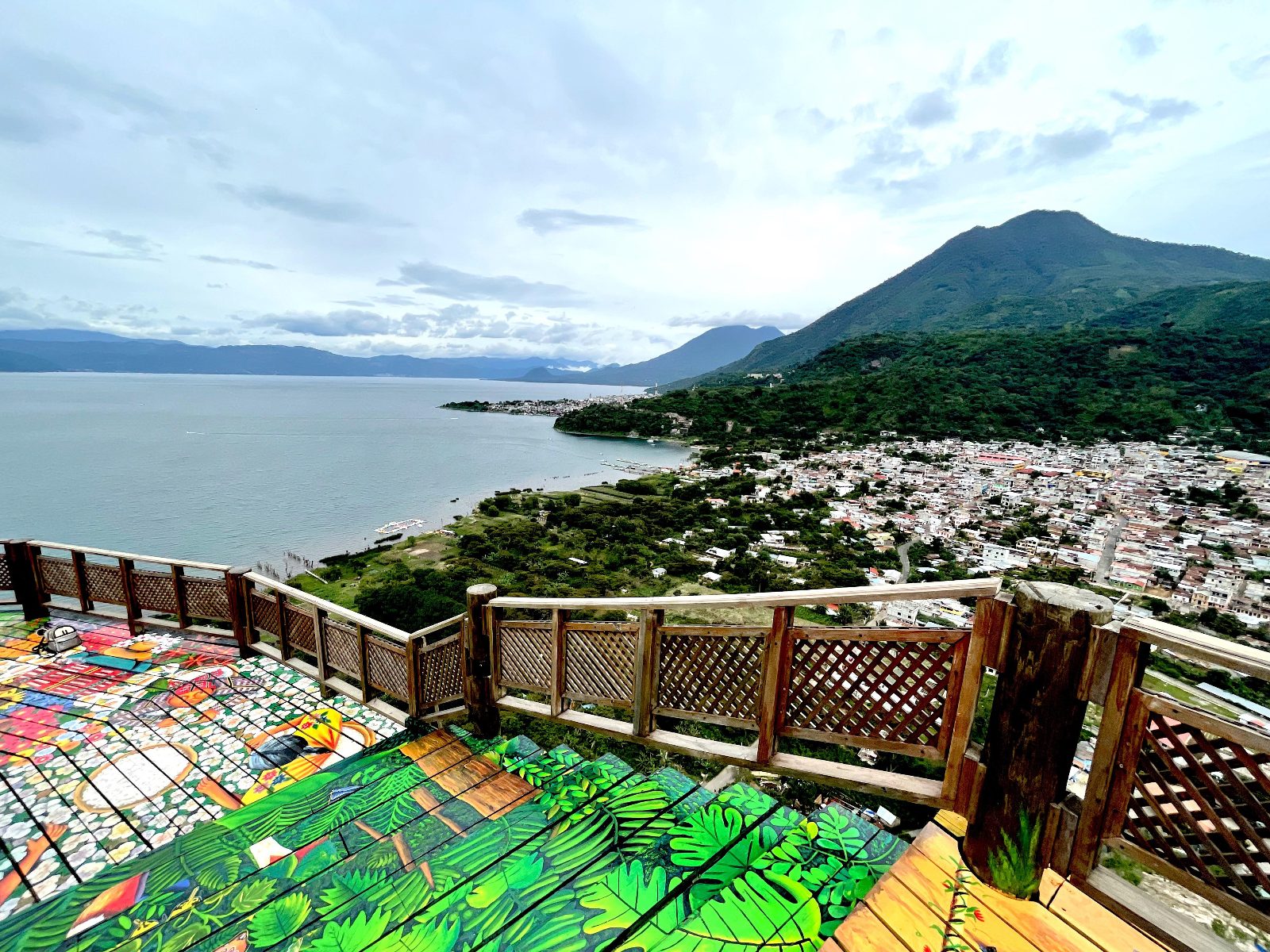
Mirador Kaqasiiwaan
Located along the lower section of the trail from San Juan La Laguna, this platform features a colorful painted deck. It is ideal for taking photos of the shoreline and San Pedro town during descent.
Safety Pitfalls and Hike Mistakes to Avoid
Most problems on Indian Nose come from walking up alone in the dark or being caught unprepared for who you meet on the way. The mistakes below are the ones that repeat most often, with the concrete fix for each.
Hiking alone in the dark without a local guide
Book a guide through a San Juan La Laguna or San Pedro operator the day before. Guides know the path in the dark, walk in groups, and their presence is the main deterrent against robbery on the pre-dawn trail.
Carrying valuables, camera bags and phones on display
Take only what you need: one camera, a headlamp, and small cash for the 50 GTQ viewpoint entry. Leave passports, jewellery and spare cards at your accommodation.
Paying anyone who stops you and demands money
The only fee you owe is the 50 GTQ per-person viewpoint entry, collected at the official gate at Rostro Maya, San Juan La Laguna, Sololá, Guatemala. If someone stops you mid-trail asking for extra, stay calm, do not argue, and let your guide handle it.
Accepting a "guide" who approaches you on the street
Arrange guides through your hotel, a registered tour office, or the community tourism association. Ask for a name and a meeting time in advance rather than agreeing to an unvetted offer at 04:00.
Splitting from the group to walk down alone afterwards
Descend with the same group you came up with. Solo descents after the crowd disperses are when most incidents are reported.
Setting off with no phone charge or headlamp battery
Charge your phone fully and test your headlamp the night before. The path is unlit during the 04:00–06:00 arrival window and phone torches drain fast in the cold.
Gear Preparation and Pre-Hike Checklist
Most of what makes this pre-dawn climb comfortable gets packed the night before, so work through this list in order from booking to the moment you leave your room.
-
Arrange your guide in advance — Guides fill up in high season and organise the 04:00 pickup.
-
Set aside 50 GTQ in small notes — The viewpoint entry fee is per person and collected in cash.
-
Break in sturdy closed shoes — The path is loose dirt and rock, slippery in the dark.
-
Pack a headlamp with fresh batteries — You will climb roughly an hour before any daylight; phone torches drain fast.
-
Layer a fleece and windbreaker — The summit sits well above the lake and holds cold wind until the sun clears the ridge.
-
Fill a one-litre water bottle — There is nowhere to buy drinks on the ascent.
-
Charge your phone or camera fully — Cold air drains batteries quickly during the wait for first light.
-
Lay out clothes and daypack before bed — A 04:00–06:00 arrival window means dressing in the dark without waking the household.
Check availability
Frequently asked questions about indian nose sunrise hike guide
Everything you need to know about indian nose sunrise hike guide