4 hr
Lake Atitlán Sunrise Hike: Indian Nose Peak
- Entry ticket
- Mobile voucher
- Valid same day
- Free cancellation
Indian Nose Sunrise Hike from San Pedro — Guided 04:00 Departures
One hundred steps in the dark, one lake turning gold below.
Compare fares, pick the fit — all bookings are mobile-voucher and eligible for free cancellation where shown.
4 hr
4 hr
6 hr
| Experience | From | Duration | Rating | Lunch | Guide | Free cancel. | Price | |
|---|---|---|---|---|---|---|---|---|
|
Standard Entry
Most popular
Lake Atitlán Sunrise Hike: Indian Nose Peak
|
— | 4 hr | ★ 4.4 | — | ✓ | ✓ | €28 | Book → |
|
Standard Entry
Mayan Nose Sunrise Trek at Lake Atitlán
|
— | 4 hr | ★ 4.6 | ✓ | ✓ | ✓ | €30 | Book → |
|
Guided Experience
Indian Nose Sunrise Hike from Panajachel
|
Panajachel | 6 hr | ★ 4.9 | — | ✓ | ✓ | €77 | Book → |
Worth it for early risers, skippable for late sleepers
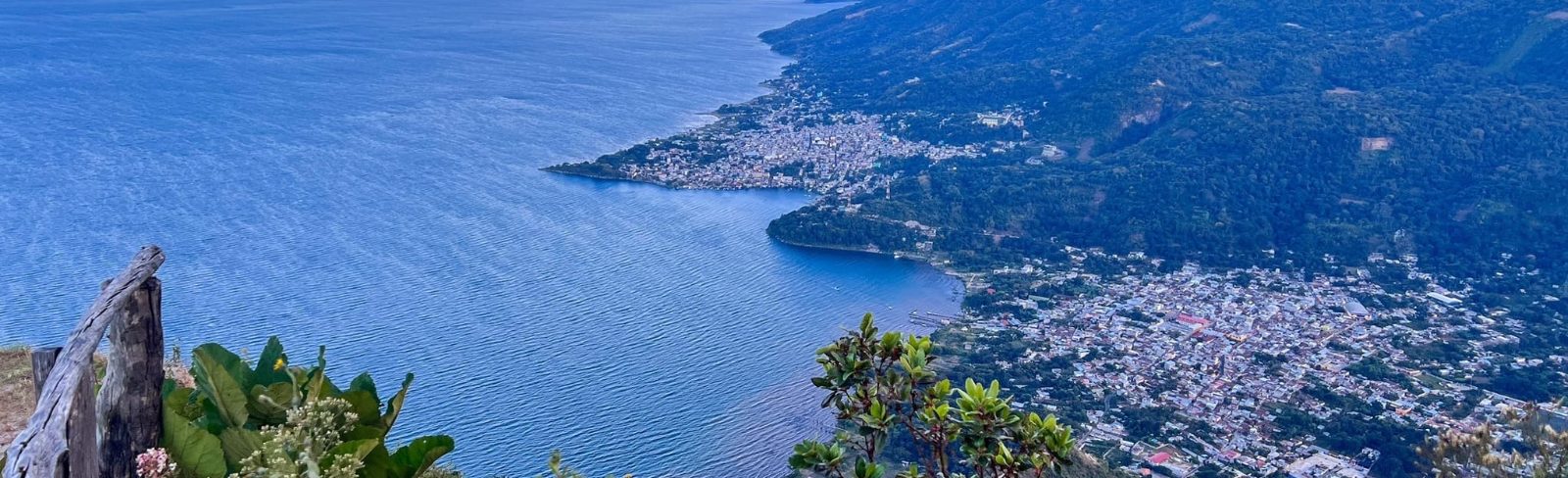
The indian nose sunrise hike from san pedro costs 30 GTQ entrance fee per person on top of whatever guided trek you book, and the real price is the 04:00–05:00 arrival window that puts you out of bed around 3am. What you get for that: roughly 100 steps of access at the top of the Rostro Maya ridge above San Juan La Laguna, and a clear view down the volcanic caldera to Volcán San Pedro, Tolimán and Atitlán as the light hits the water. Guided departures matter here — the trail is loose, unlit and pitch dark on the ascent, and lone hikers have had problems on the ridge. This pays off for anyone comfortable on uneven ground for an hour. It doesn't pay off if you're chasing a lie-in, hiking without a headlamp, or unhappy on steep dirt.
Bottom line: Book a guided Indian Nose sunrise trek from San Pedro if you'll take a hard alarm for a caldera-wide view — otherwise sleep in and enjoy the lake from shore.
They complement each other; most visitors who do both call the indian nose sunrise hike from san pedro tour the more rewarding option for dawn views. Both paths offer distinct perspectives of the surrounding highlands. For a longer trek, some opt for full-day indian nose sunrise hike from san pedro tours.
|
Top pick Indian Nose |
Volcán San Pedro | |
|---|---|---|
| Difficulty Level | Moderate (short but steep) | Challenging (strenuous volcano climb) |
| Typical Duration | 1.5–2 hours (total hiking time) | 4–6 hours (total hiking time) |
| Elevation Gain | 462 feet (140 m) from Santa Clara | 3,937 feet (1,200 m) from trailhead |
| Primary Highlight | Lake Atitlán sunrise over active volcanoes | Summit views above the clouds |
| Guide Requirement | Highly recommended for safety | Recommended (often included at entrance) |
| See tickets & prices |
Verdict: Securing your indian nose sunrise hike from san pedro tickets guarantees a legendary sunrise over Lake Atitlán with minimal physical strain, while the volcano is reserved for dedicated altitude hikers.
Hand-picked experiences loved by thousands of travelers
4 hours
Free Cancellation
Hike the iconic Indian Nose peak during the day to enjoy magnificent volcanic vistas over Lake Atitlán.
6 hours
Free Cancellation
Scale the iconic Indian Nose summit before dawn to watch the sunrise over Lake Atitlán's volcanoes.
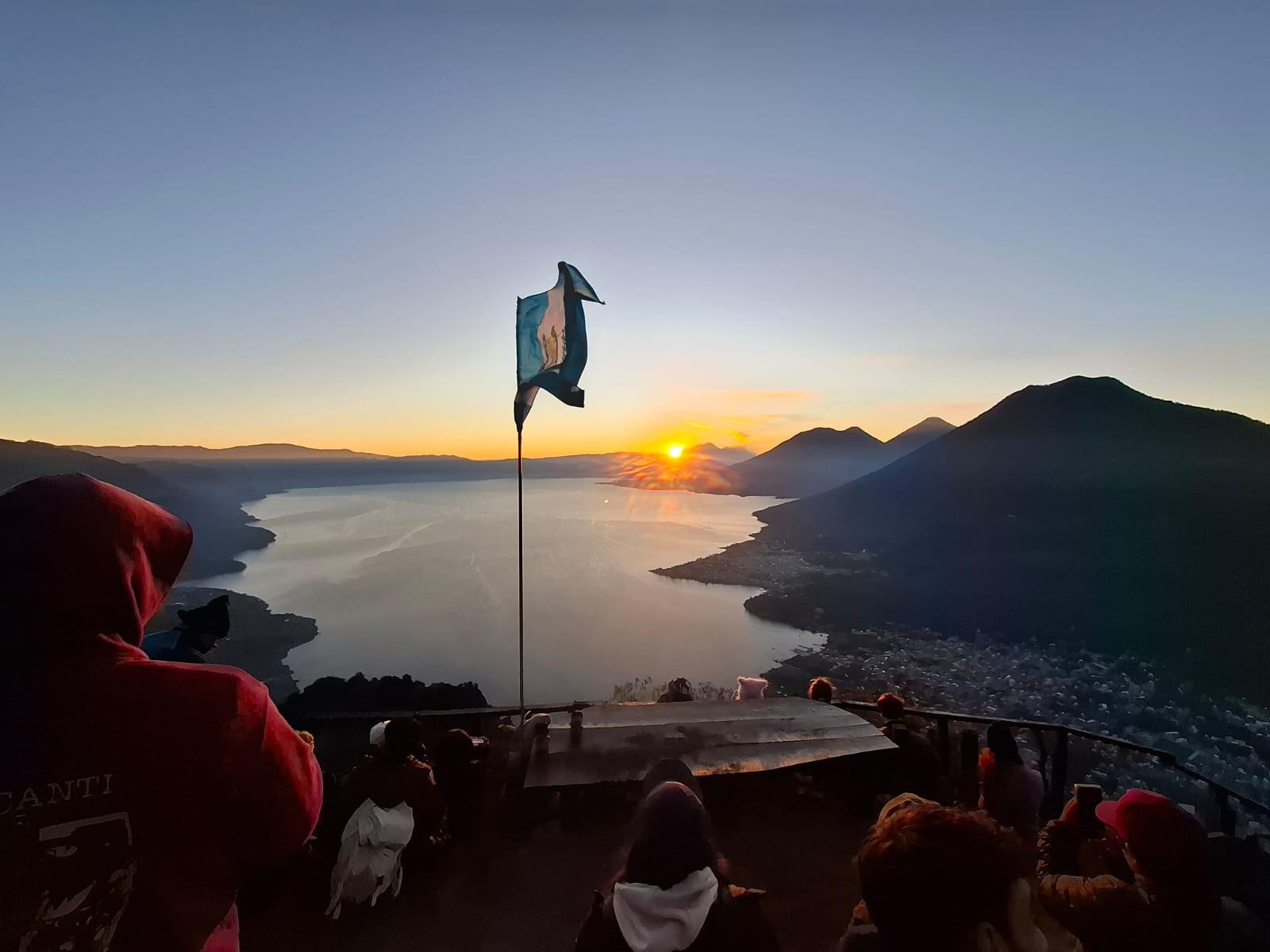
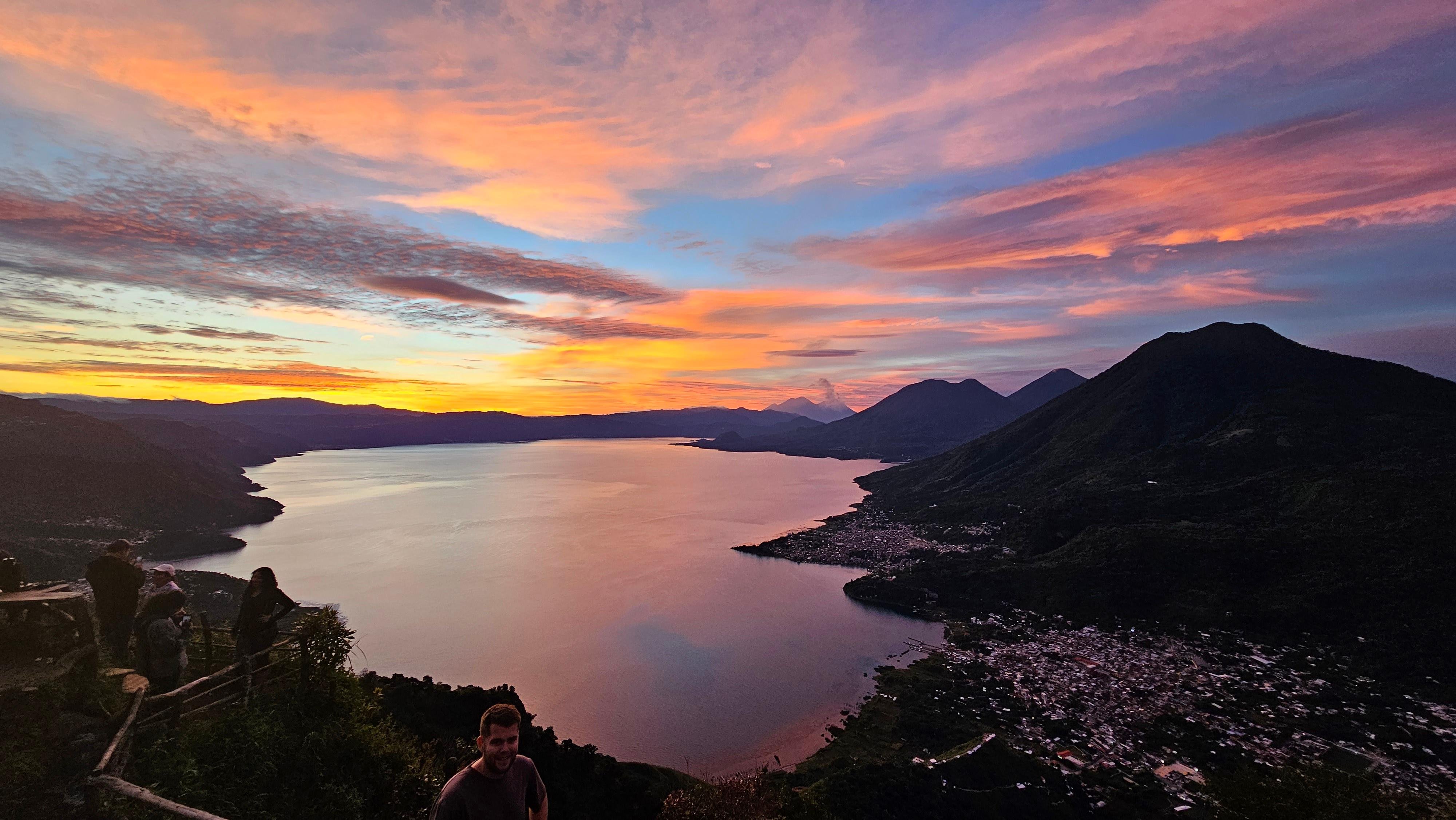
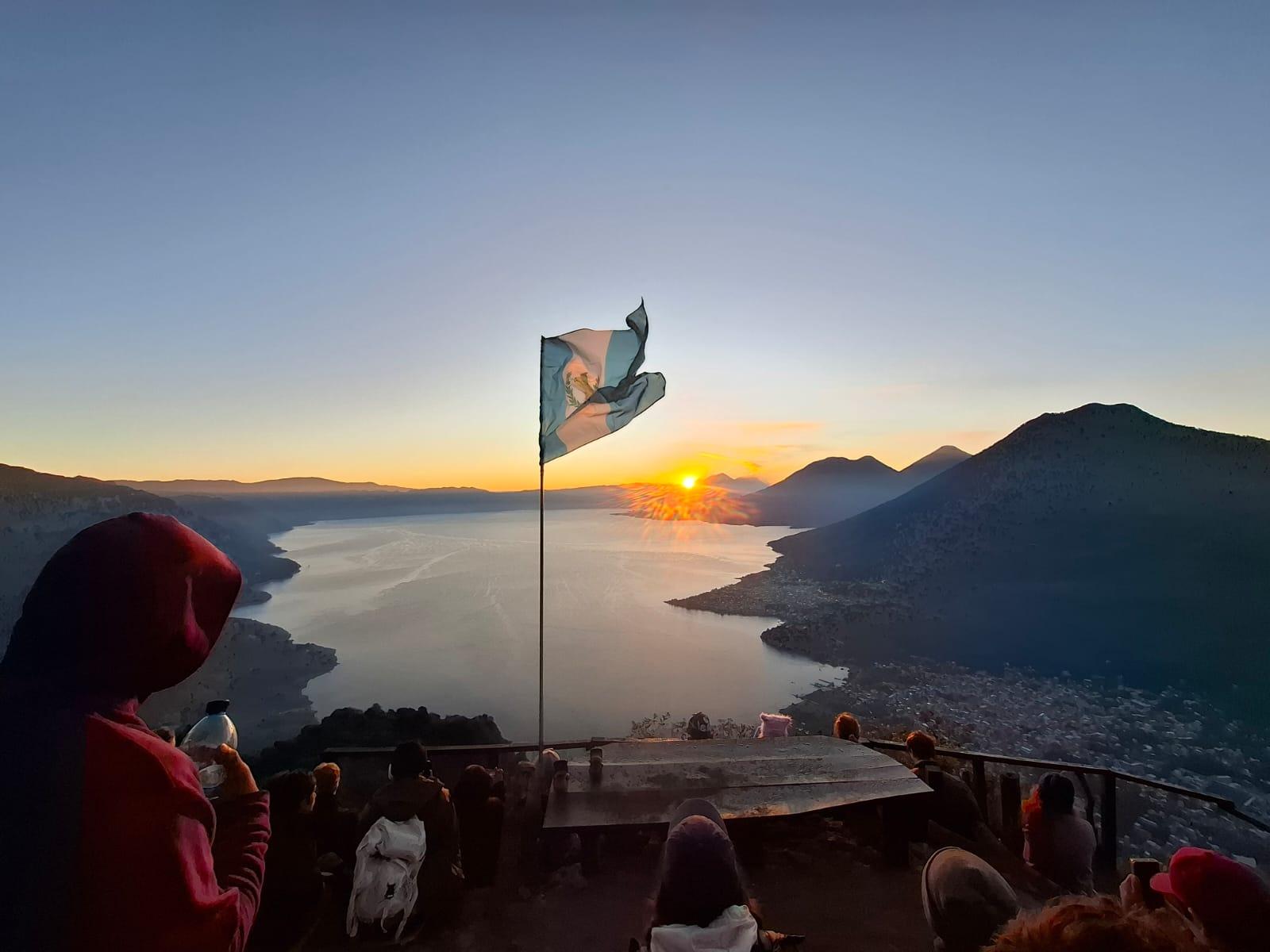
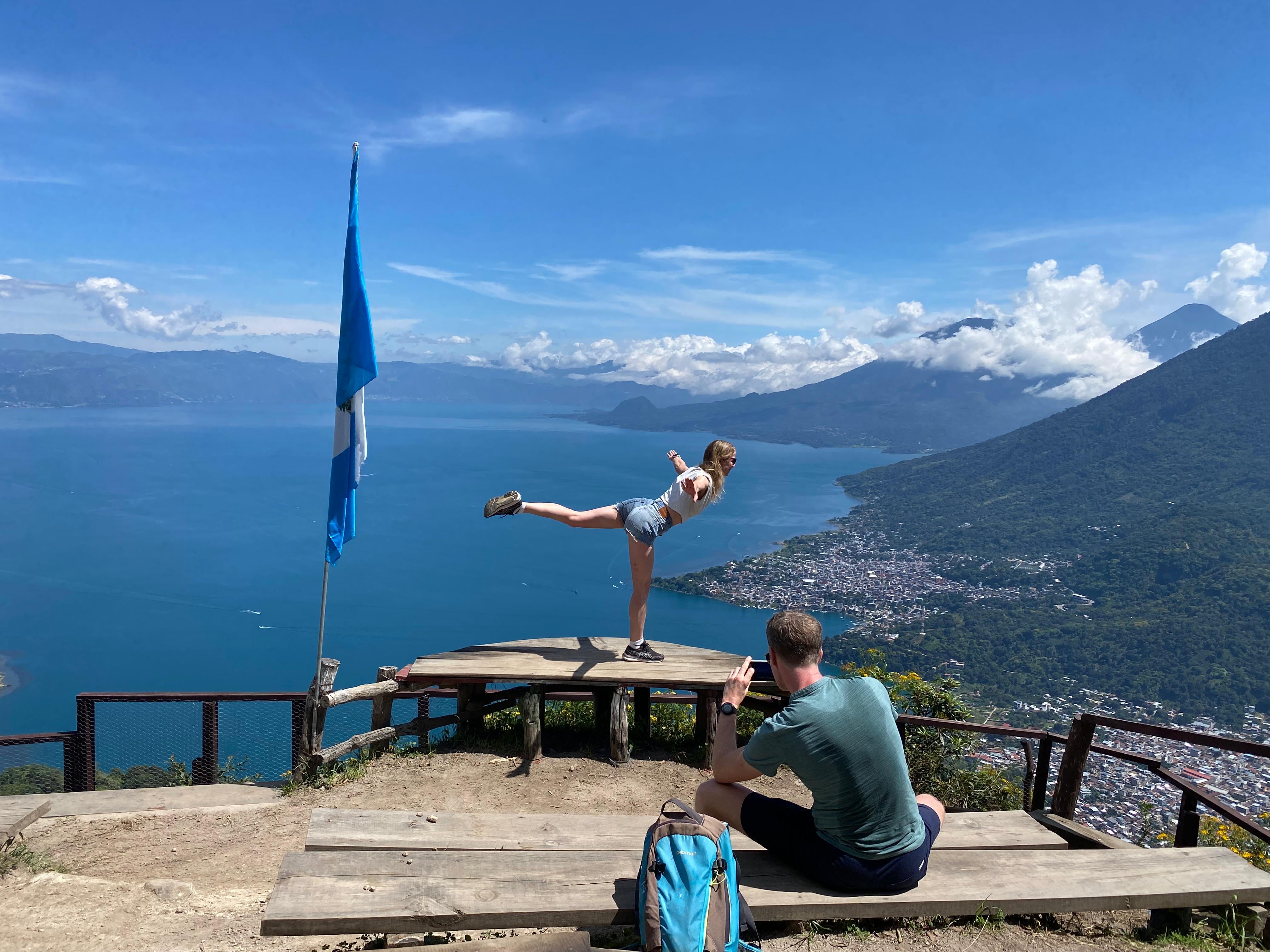
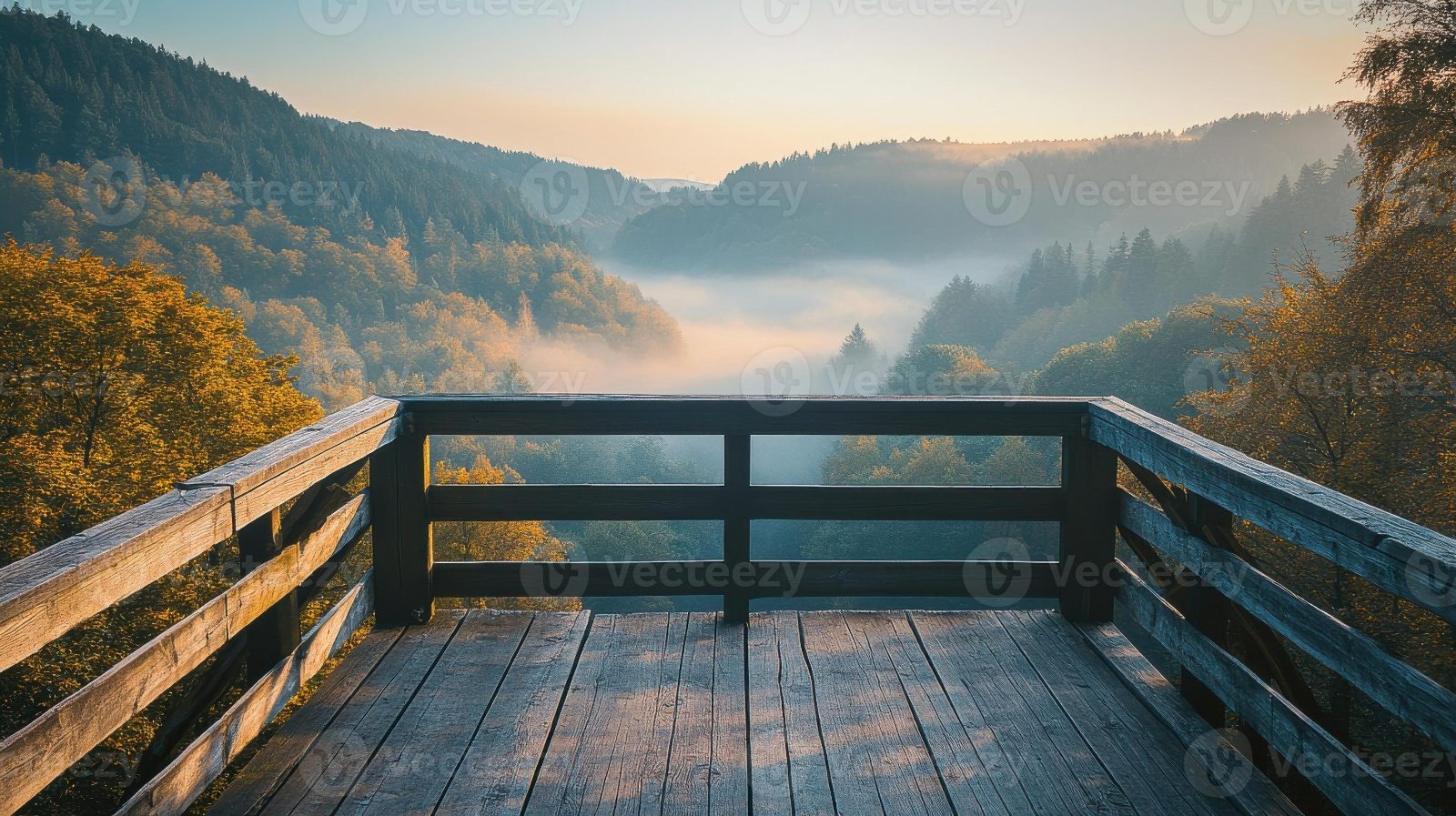
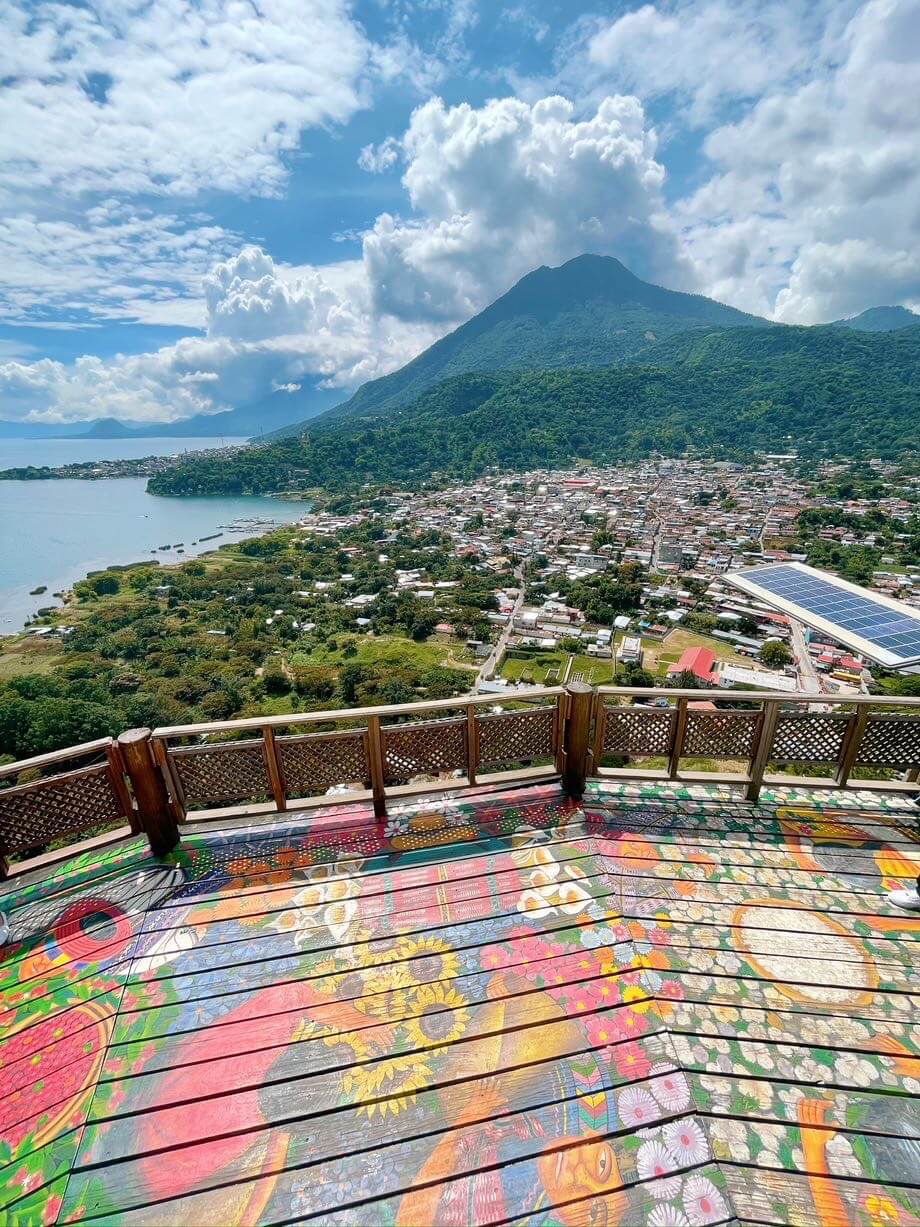
This rustic timber terrace sits at the peak's highest point of 2,236 meters above sea level. It offers clear 360-degree views of the surrounding lake basin and the volcanoes of San Pedro, Tolimán, and Atitlán. A safety railing guards the edge of the sheer drop.
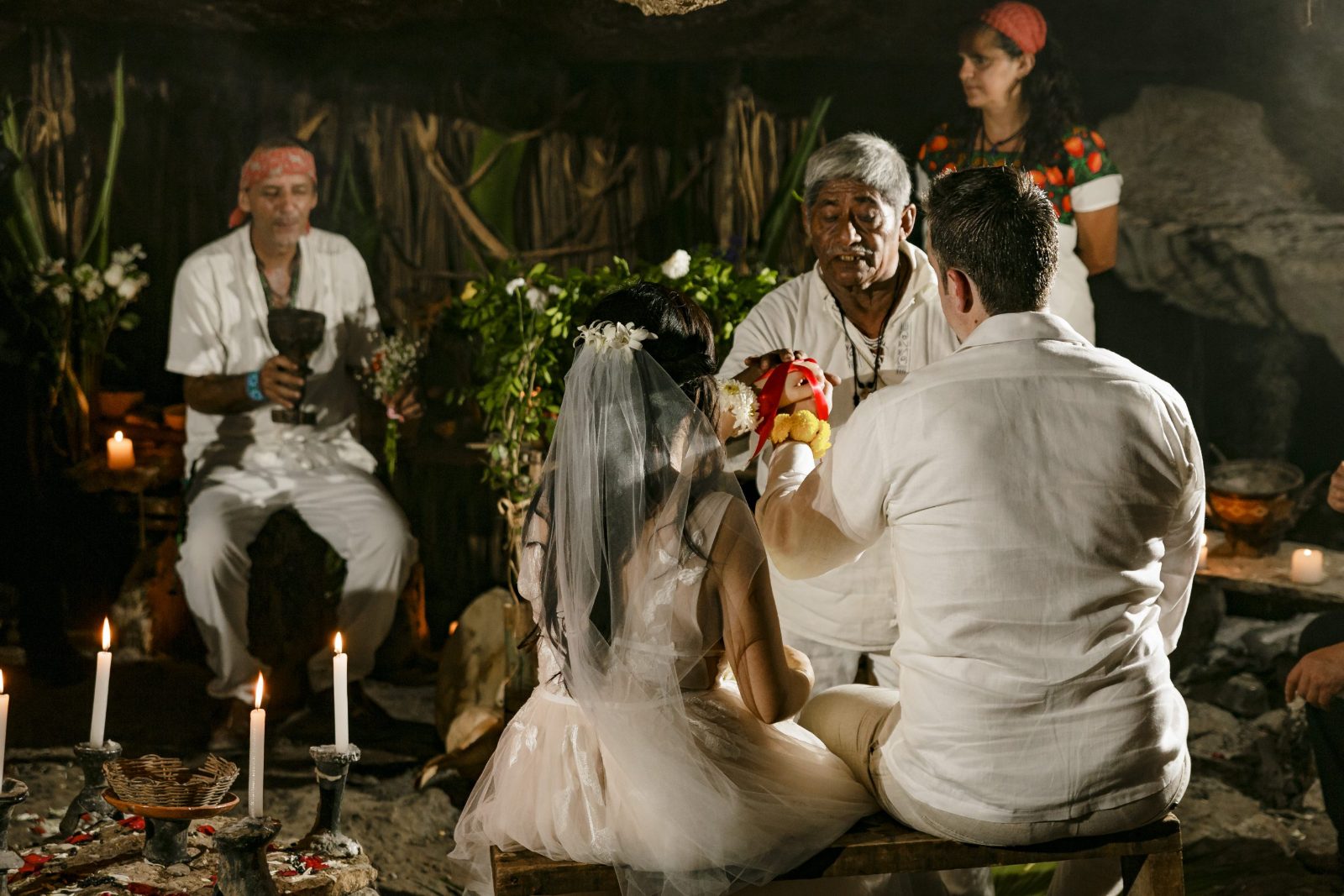
Tucked just below the main summit lies a sacred site where local Kaqchikel Maya residents perform traditional ceremonies. Visitors will often see the remains of colorful candles, incense, and flower offerings placed on the stone hearth. It serves as an active place of worship for the surrounding communities.
This prominent rocky ridge forms the literal profile of the sleeping Mayan face when viewed from below. Scrambling to this narrow rock outcropping requires careful footing but provides an unobstructed look down at the towns of San Juan and San Pedro. The peak rises approximately 290 meters above the trailhead.
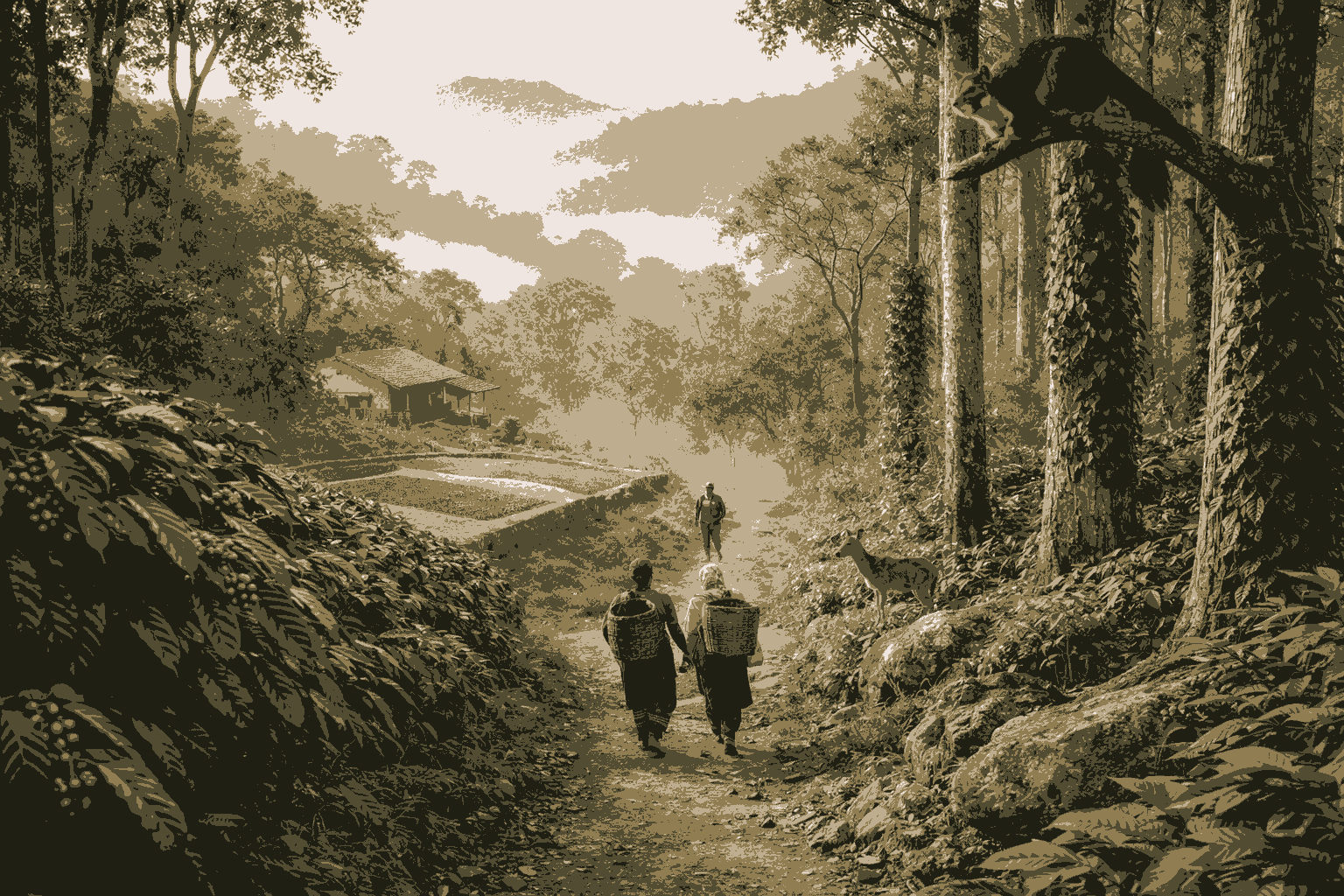
The lower section of the trail winds through private family-owned coffee fields and corn crops. Farmers harvest high-altitude Arabica beans here between December and March, carrying heavy loads down the steep mountainside. It highlights the agricultural history of the Sololá region.
Located near the municipal cemetery of Santa Clara La Laguna, this entry point is the start of the short 1.4-mile roundtrip route. A small wooden gate marks the transition from community roads to the forested dirt trail. It serves as the primary meeting spot for early morning hiking groups.
All the details about your upcoming adventure in one place
The caldera holding Lake Atitlán was blasted open roughly 84,000 years ago, in an eruption whose ash layer is still logged in seabed cores thousands of kilometres away. The ridge that gives the Indian Nose Sunrise Hike from San Pedro its name sits on that caldera's northern rim.
Tz'utujil communities know it as Rostro Maya — the Mayan face — for the reclining profile it cuts against the sky. Seen from the water, the silhouette reads as forehead, nose and chin.
The land is not a national park. It belongs to San Juan La Laguna, in the department of Sololá, and access is administered by the community through a 30 GTQ entrance fee, per person. That figure is a community levy rather than a state charge; it funds trail upkeep on a ridge that carries thousands of walkers a year. A short flight of 100 steps marks the final access to the upper viewpoint. Guides on the Lake Atitlán sunrise trek are drawn largely from San Juan and San Pedro La Laguna, and most speak Tz'utujil alongside Spanish.
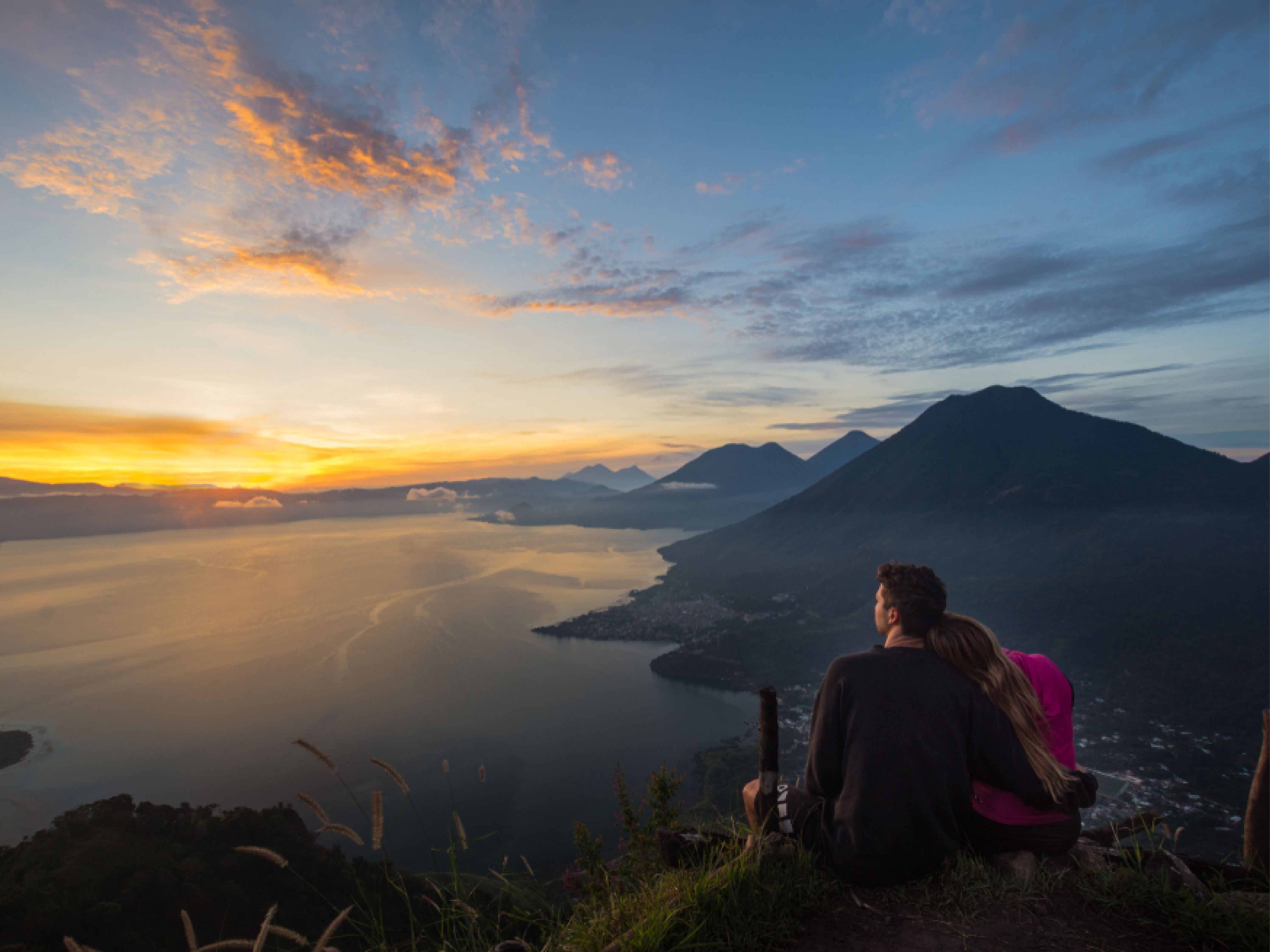
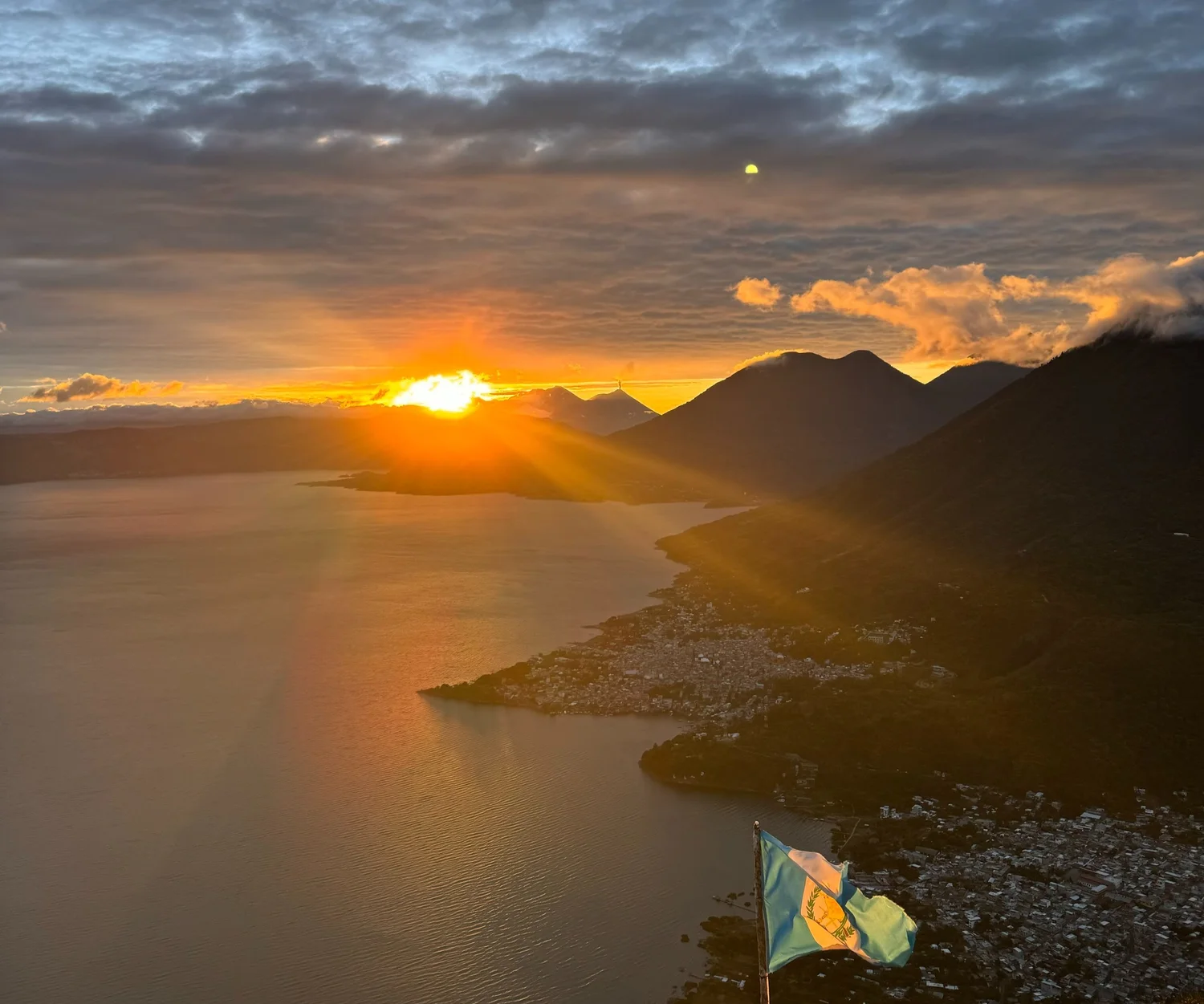
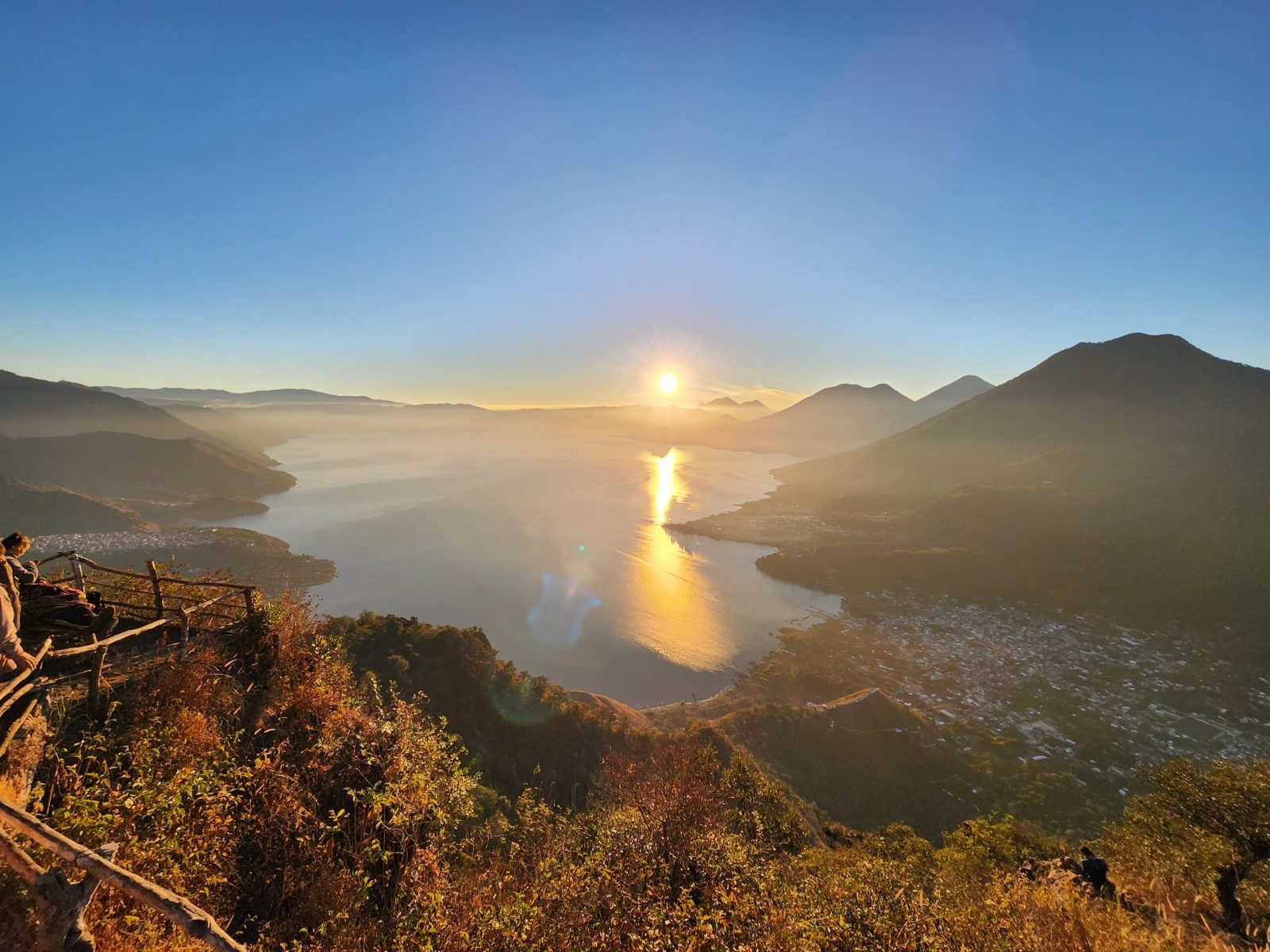
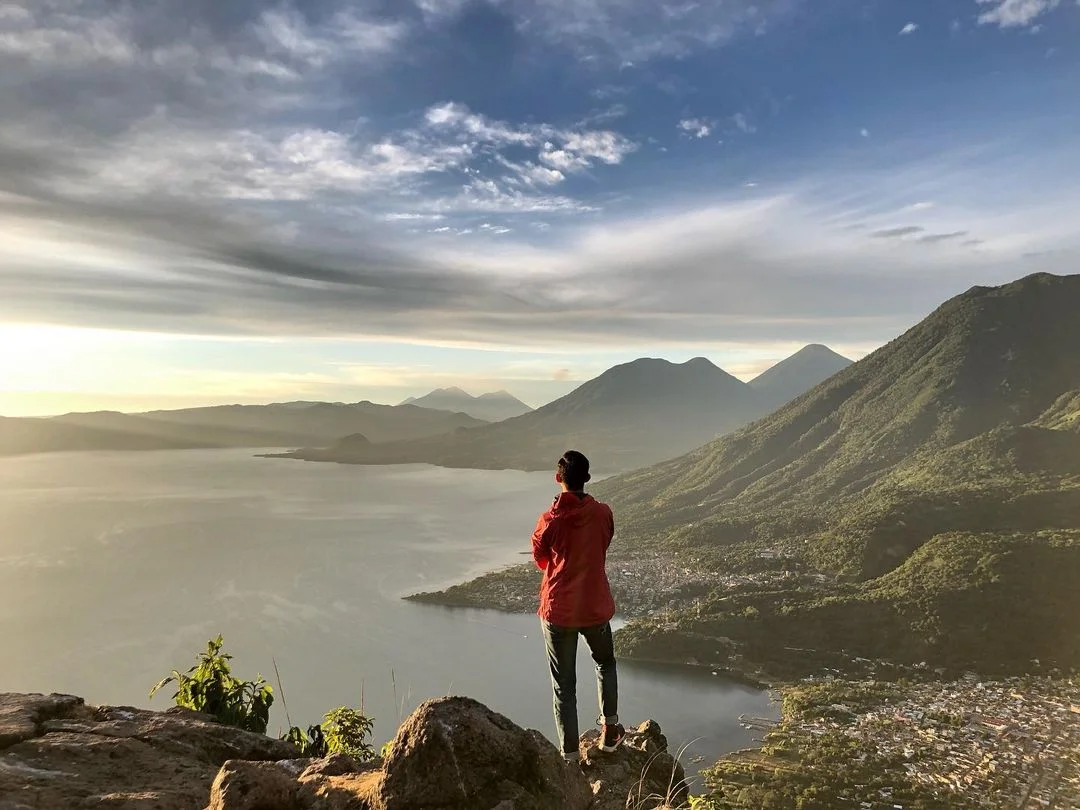
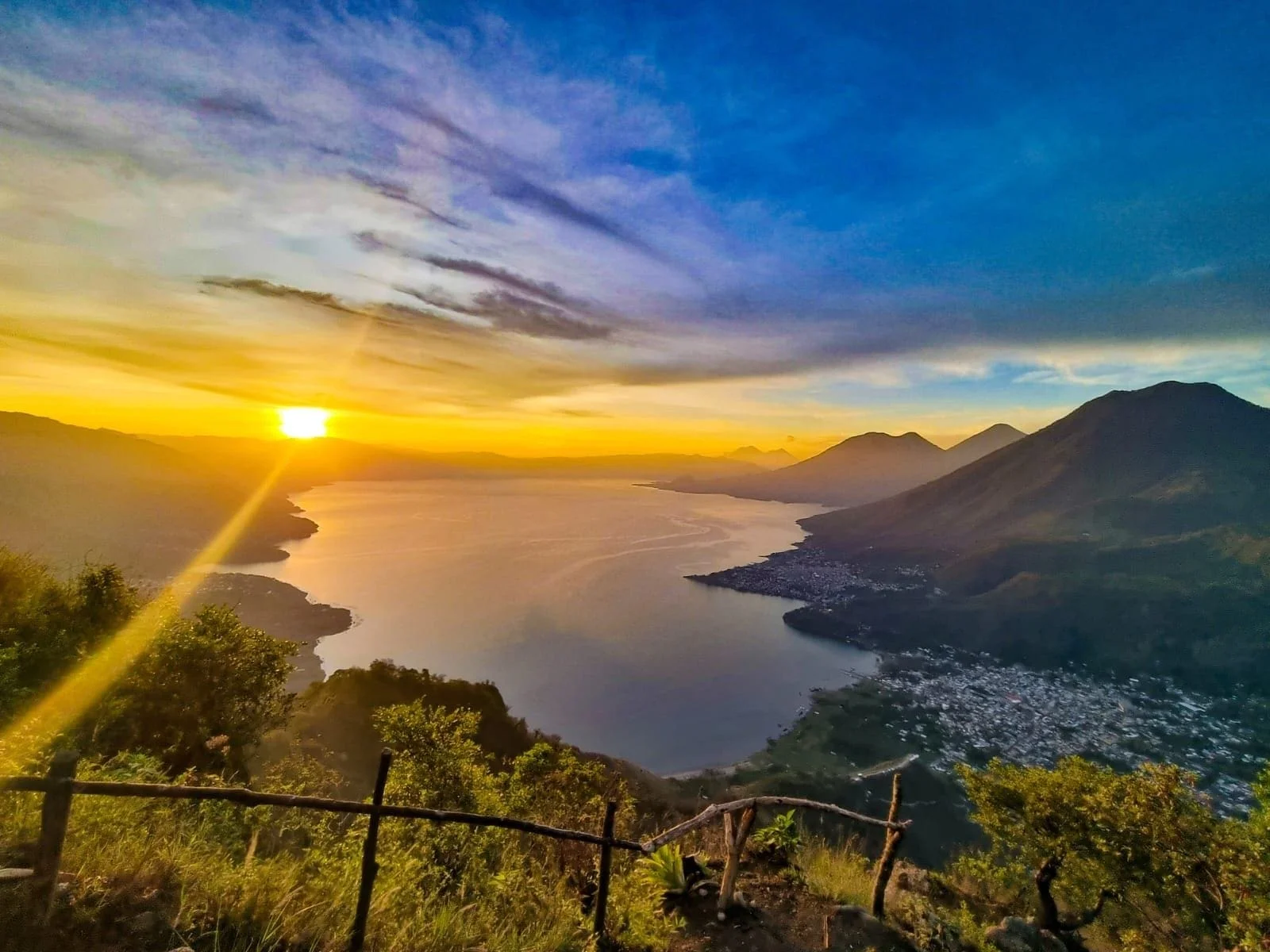
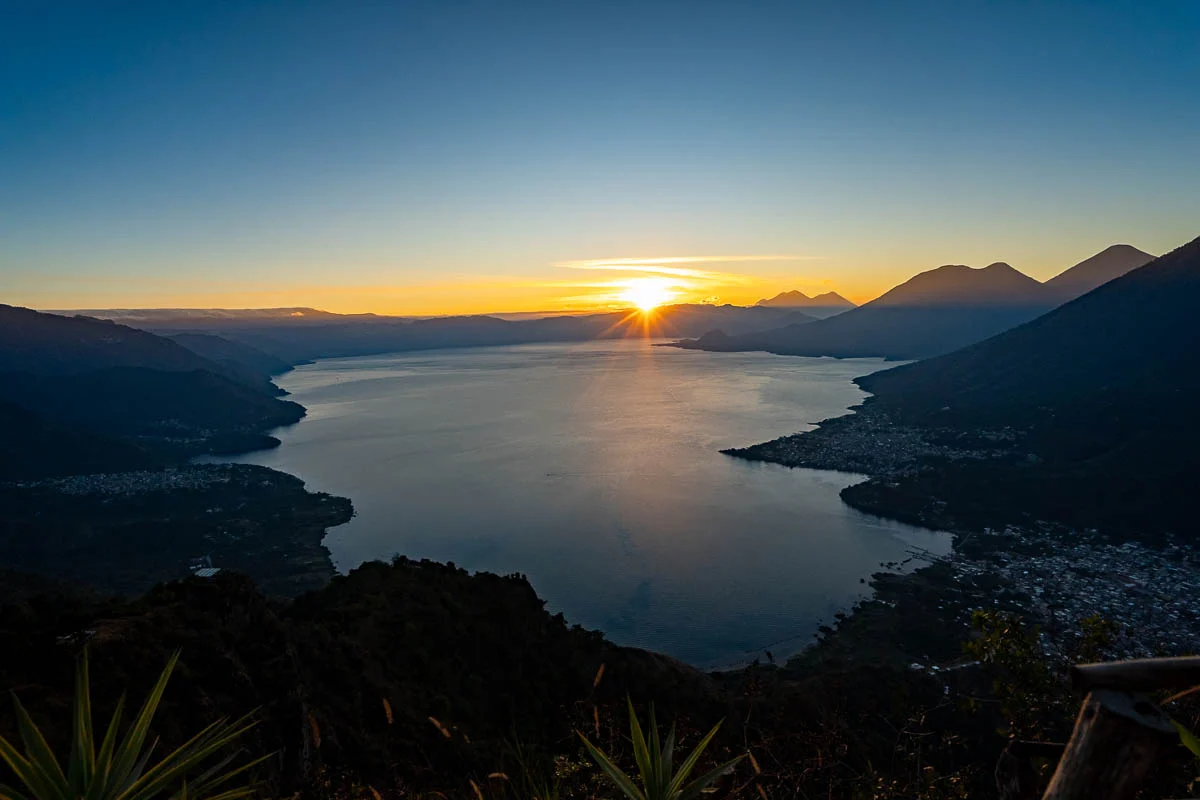
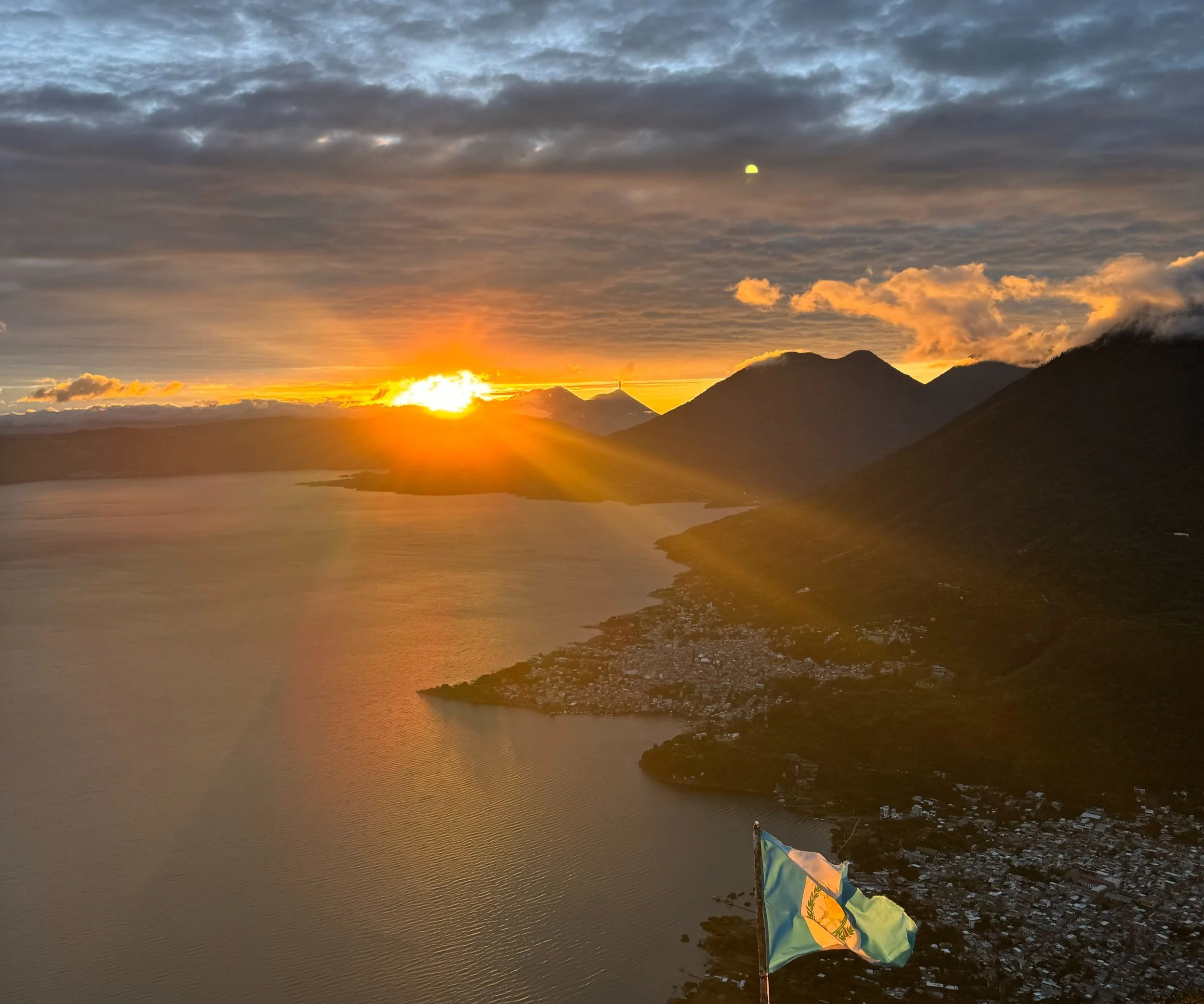
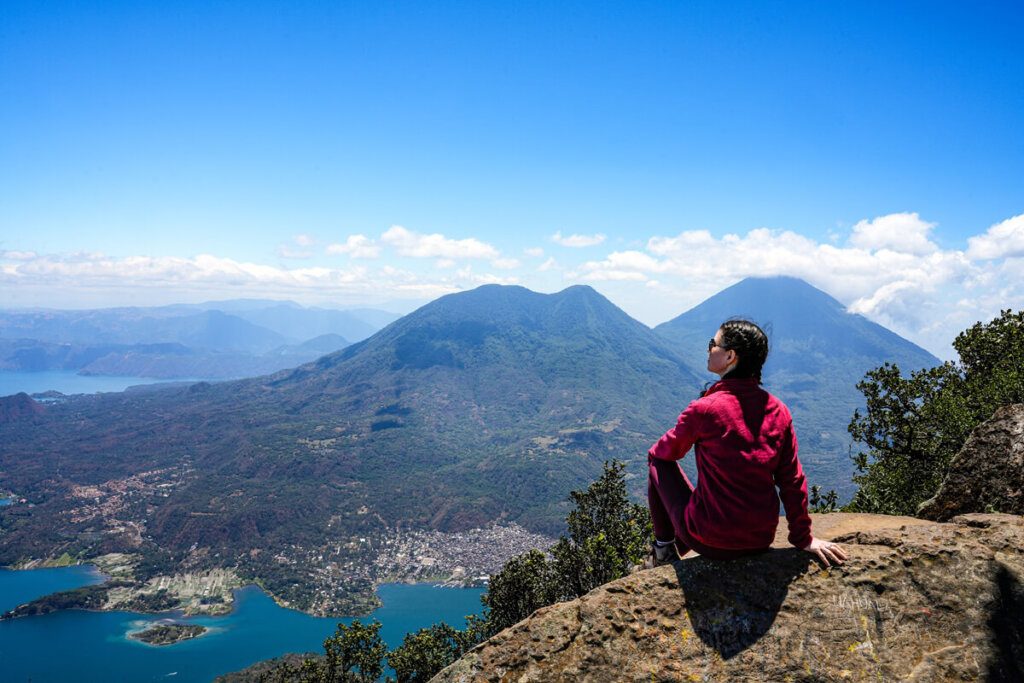
What the summit offers is geometry. Three volcanoes stand in sequence across the water — San Pedro closest, then Tolimán, then Atitlán behind it — and the lake surface, 1,562 metres above sea level, holds their reflection until the wind arrives mid-morning. The caminata al amanecer al Rostro Maya, as it is known locally, follows a spur trail rather than a single summit path. Operators running Indian Nose Sunrise Hike from San Pedro tours time departures so that walkers reach the ridge while the eastern altiplano is still grey. Light comes first to the volcano cones, then slides down to the water. Villages appear one by one along the shoreline: Santiago Atitlán, San Marcos, Panajachel.
The ridge matters beyond its view. It sits on the boundary between highland cloud forest and the drier maize terraces of the Sololá escarpment, and the walk crosses coffee plots, milpa and pine before it opens out. Birds along the corridor include motmots and the occasional flock of chocoyos, the parakeets that lend their name to the ancient eruption. Listings for Indian Nose Sunrise Hike from San Pedro tickets set out from the lakeshore villages below, on a route the caldera rim has carried since long before tourism reached the altiplano.

Seen from the water, the silhouette reads as forehead, nose and chin.
Cancellations made at least 24 hours prior to the excursion receive a full refund. The 30 GTQ entrance fee paid to the local community is non-refundable once the indian nose sunrise hike from san pedro begins.
Weather · crowds · average price — dots go green to amber to red as each metric rises.
This is the height of the dry season, offering the clearest skies for viewing the sunrise over the volcanoes. Morning temperatures at the high altitude can drop close to 5°C, requiring warm windproof clothing.
Warm and dry conditions continue, though agricultural burning in April can sometimes create haze over Lake Atitlan. Early spring is excellent for hiking, with temperatures averaging around 12°C during the pre-dawn hours.
This period falls within the rainy season, meaning clouds and afternoon downpours are common. Sunrise hikes are still possible, but there is a higher risk of overcast skies blocking the morning sun.
The rainy season tapers off in late October, giving way to clean morning air and green landscapes. November is highly recommended as the volcanic caldera is vibrant and skies begin to clear consistently.
A reliable source of light is mandatory as the trail is pitch black before dawn. If your operator does not provide one, rent a headlamp in town before starting the indian nose sunrise hike from san pedro.
The summit sits at over 2,200 meters above sea level. If you have recently arrived from a low-altitude area, spend a couple of days acclimatizing in San Pedro before attempting the climb.
It is very cold at the peak before sunrise, but the steep hike down will warm you up quickly. Wear a moisture-wicking base layer, a warm fleece, and a windproof jacket.
The trail has several unmarked forks and passes through private land. Local guides ensure you stay on the correct path and handle all interactions with landowners.
The final ascent features 100 stairs carved into the dirt. These steps can be slippery when wet, so take your time and maintain three points of contact on steep sections.
The peak rising above San Juan La Laguna carries an older name than the one printed on trail signs. Tz'utujil speakers call it Rupalaj K'istalin, understood as the face of the ridge. Colonial-era chroniclers described the Tz'utujil kingdom centred at Chuitinamit, near present-day Santiago Atitlán, which fell to Pedro de Alvarado's forces in 1524. The high ground above the lake remained ceremonial long after that defeat. The nickname "Indian Nose" belongs to twentieth-century tourism, not to the community, and many local guides prefer Rostro Maya or the Tz'utujil name. The ridge functions as a sacred site rather than a viewpoint alone. Ajq'ijab', the Maya daykeepers who read the 260-day Cholq'ij calendar, still climb to altars near the summit to burn copal, candles and cane sugar. Visitors on an indian nose sunrise hike from san pedro may encounter these ceremonies in progress; the convention is to keep distance and refrain from photographing them. Guatemala's 1996 Peace Accords included commitments on Maya sacred sites, and Ministerial Agreement 981-2011 later listed protected ceremonial places, strengthening the legal footing for such practice. Community tourism arrived gradually. San Juan La Laguna organised itself around cooperatives — weaving, coffee and painting collectives formed from the 1990s onward — and the same model shaped access to the ridge. Municipal management set a 30 GTQ entrance fee, per person, collected at the control point, with roughly 100 steps on the final approach. San Pedro La Laguna, ten minutes away by tuk-tuk, became the departure base for most operators, and today's indian nose sunrise hike from san pedro tours run under guides drawn from both towns. What survives is dual use. The altars, the Lake Atitlán caldera below and the three volcanoes — San Pedro, Tolimán and Atitlán — frame a site that remains ceremonial ground first, with an indian nose sunrise hike from san pedro tour or a set of indian nose sunrise hike from san pedro tickets layered on top.
Tz'utujil communities used the ridge known as Rupalaj K'istalin for calendar-based ceremonies overseen by ajq'ijab'.
Pedro de Alvarado's forces defeated the Tz'utujil at Chuitinamit, ending independent rule around the lake.
San Juan La Laguna was formally established as a colonial reduction settlement under Dominican administration.
Foreign visitors popularised the profile nickname "Indian Nose", a label the community did not choose.
The Guatemalan Peace Accords included the Agreement on Identity and Rights of Indigenous Peoples, covering access to Maya sacred sites.
Cooperative organisation in San Juan La Laguna extended from weaving and coffee into locally guided tourism.
Ministerial Agreement 981-2011 advanced formal recognition and protection of ceremonial places nationwide.
The summit operates under community management with a 30 GTQ entrance fee, per person, and roughly 100 steps on the final approach.
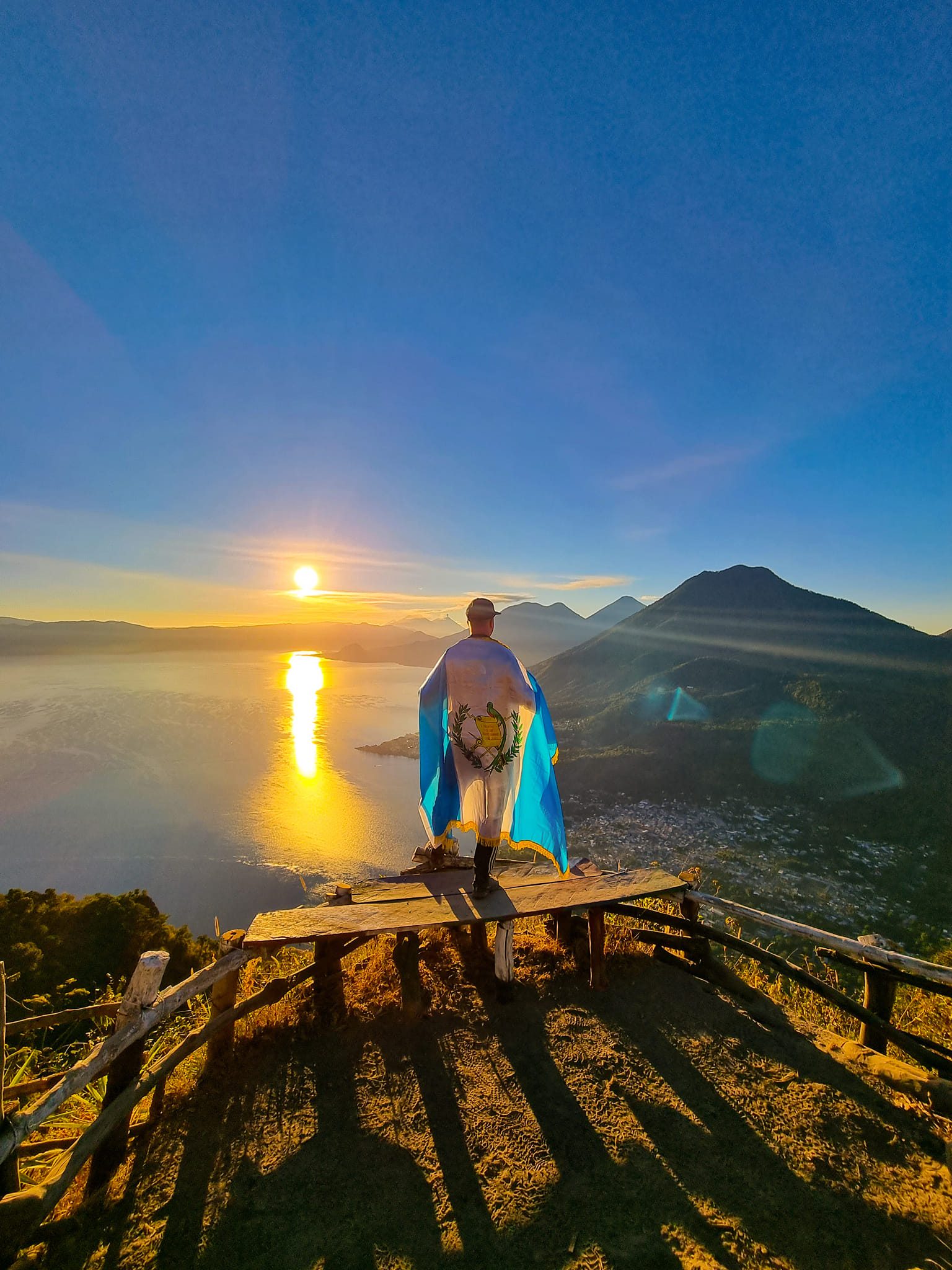
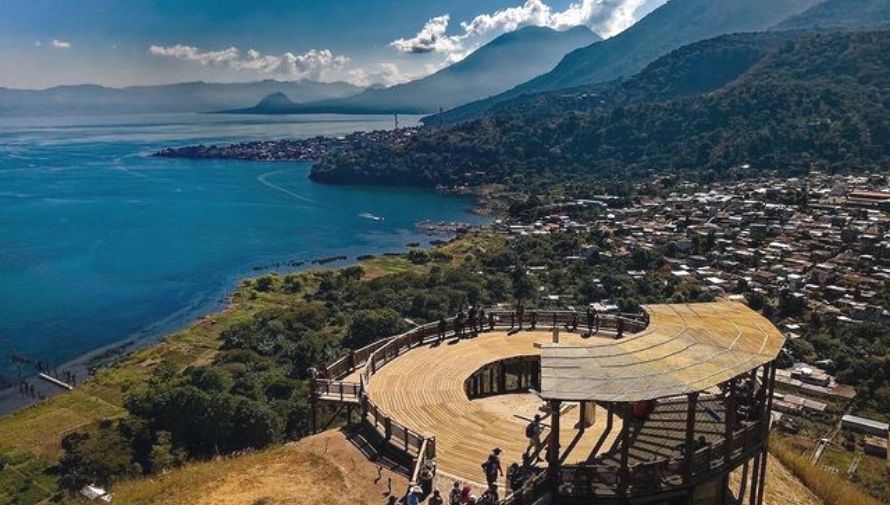
Travelers buying indian nose sunrise hike from san pedro tickets will reach this vibrant wooden platform featuring colorful local murals. Photographers can frame the deep blue waters and volcanic ridge using the artistic wooden railings.
The highest vantage point on the peak resembles the nose of the Mayan face. Capture the dramatic morning light illuminating Toliman Volcano and the surrounding volcanic ridge. This peak is the primary goal of the classic indian nose sunrise hike from san pedro.
A spacious and slightly hidden deck offers a safer, less wind-swept angle of the lake. It is ideal for long-exposure photography of the waking towns. Many visitors opt for this location during guided indian nose sunrise hike from san pedro tours. It acts as a great alternative to a standard Rostro Maya sunrise tour.
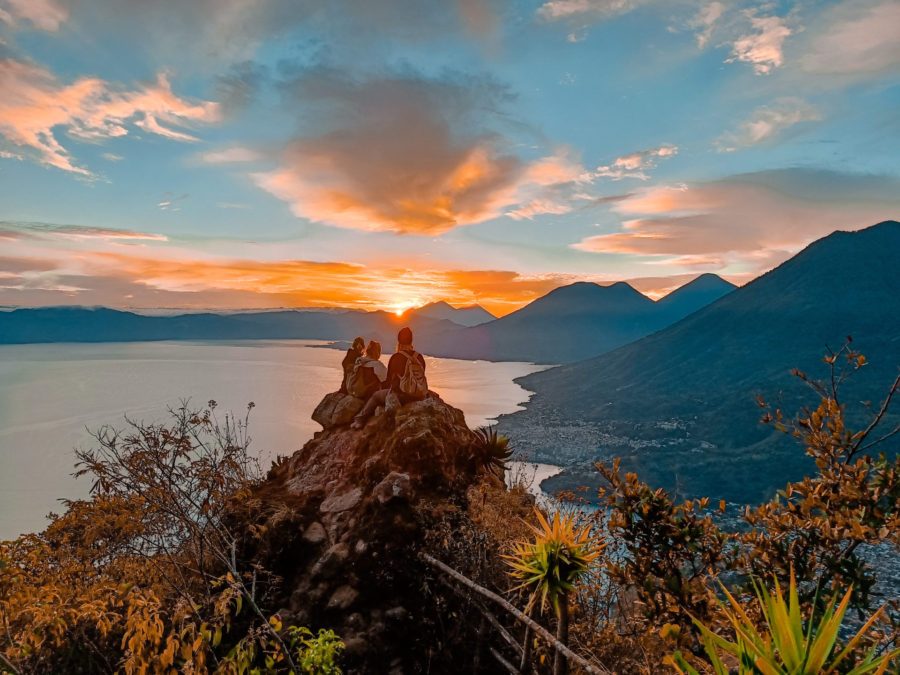
An elevated volcanic boulder just below the summit offers an organic foreground for portraits. Stand here to frame the rising sun directly behind the distant peaks. Many capture this shot on a standard indian nose sunrise hike from san pedro tour.
Taking children on the indian nose sunrise hike from san pedro requires early alarms and strong legs, but the morning panorama rewards active families.
This steep trek is best suited for children aged six and up who can handle a quick, uphill climb. The trail climbs about 100 steep dirt stairs, making it too challenging for toddlers to walk on their own.
Strollers are entirely useless on this rugged, dirt track. If you are hiking with a baby, use a secure hiking backpack carrier instead, and watch your step on the uneven ground.
Ensure you purchase local indian nose sunrise hike from san pedro tickets that cover the 30 GTQ entrance fee per person. Shuttles depart San Pedro La Laguna early to arrive at the trailhead.
A guided indian nose sunrise hike from san pedro tour allows you to arrive during the best arrival window of 04:00–05:00. Children will need headlamps to navigate the steep ascent under the stars.
Booking professional indian nose sunrise hike from san pedro tours ensures you have an experienced local guide to lead the way. This is particularly helpful for keeping young walkers safe in the dark.
Temperatures are cold before dawn, so pack warm layers for the Rostro Maya sunrise trek. Dress kids in sturdy shoes to avoid slipping on the loose soil.
After completing the early morning indian nose sunrise hike from san pedro, hikers typically return to the neighboring lakeside towns for a hearty meal. While no food vendors operate at the summit, the surrounding villages offer excellent local coffee and dining options.
This popular lakeside spot in San Pedro La Laguna serves large breakfast platters and shakshuka. It is a favorite recovery spot after finishing the indian nose sunrise hike from san pedro tour, offering elevated views of the water. Peak hours begin around 09:00 as hiking groups head back.
Tucked away in San Juan La Laguna, this tiny coffee house features a cozy second-floor glass room with great vistas. It is the perfect place to enjoy local roast coffee and traditional breakfast plates. Many visitors who book their indian nose sunrise hike from san pedro tours end up here for a post-walk caffeine boost.
Located in San Juan La Laguna, this quiet garden restaurant specializes in artisanal cheese and charcuterie platters paired with wine. It requires reservations and is a peaceful escape after navigating the steep terrain. Keep your indian nose sunrise hike from san pedro tickets handy if you need to coordinate return times with your guide.
Everything you need to know for your journey
The hike is relatively short but steep, taking about 30 to 45 minutes to complete the ascent. The altitude and the final climb up 100 rustic dirt steps make the path moderately challenging.
There are no paved paths or wheelchair ramps on the mountain, and the final stretch requires climbing 100 steep dirt stairs. Consequently, this trail is not accessible for individuals with limited mobility.
Leashed dogs are allowed on the trails, but they are not recommended due to the steep terrain. Additionally, bringing pets along on the indian nose sunrise hike from san pedro is typically restricted by transport operators.
Prohibited items include single-use plastics, alcohol, campfires, and loud speakers. Drones are also banned at Rostro Maya unless you obtain prior authorization from the local community.
There are no food vendors or cafes on the Indian Nose mountain trail. You must bring your own water and snacks, though some tours provide hot coffee at the summit.
You can easily combine the hike with a visit to the nearby Mirador Kaqasiiwaan or spend the afternoon exploring the art galleries in San Juan La Laguna. Visiting the volcanic caldera and other nearby towns is also highly popular.
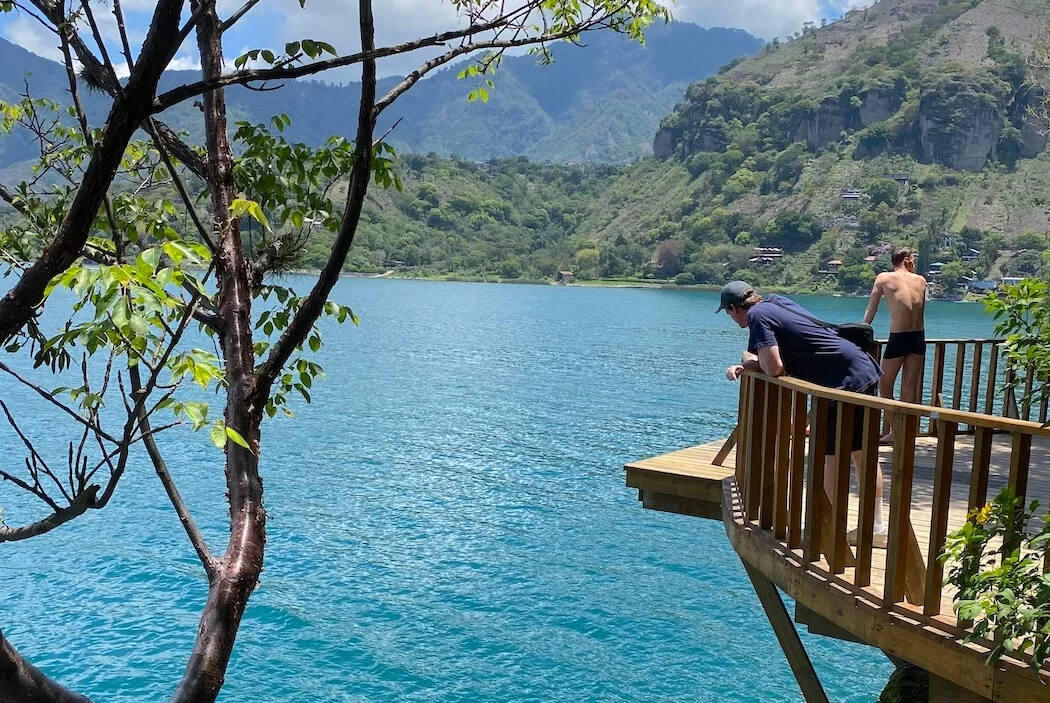
A colorful wooden platform offering panoramic views of San Juan La Laguna and the lake. It is located along the lower trail descending to San Juan.
A protected lakeside park featuring walking trails, Mayan altars, and a famous 7-meter cliff jumping platform into Lake Atitlan.
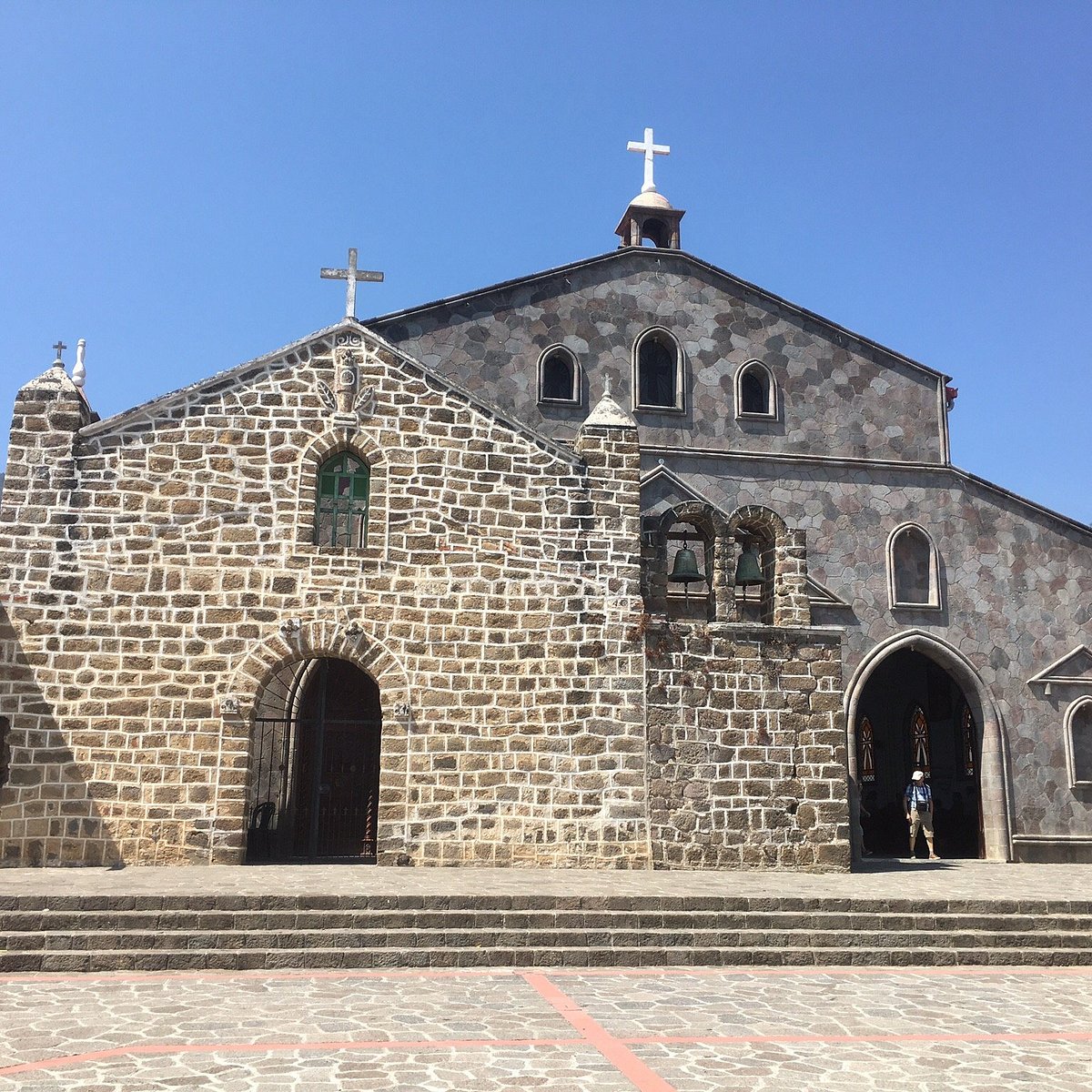
A historic Catholic church located in the heart of San Juan La Laguna, known for its beautiful facade and colorful surrounding street murals.
A massive stratovolcano towering over the south side of the lake, offering a highly challenging 5-hour trek to its peak.
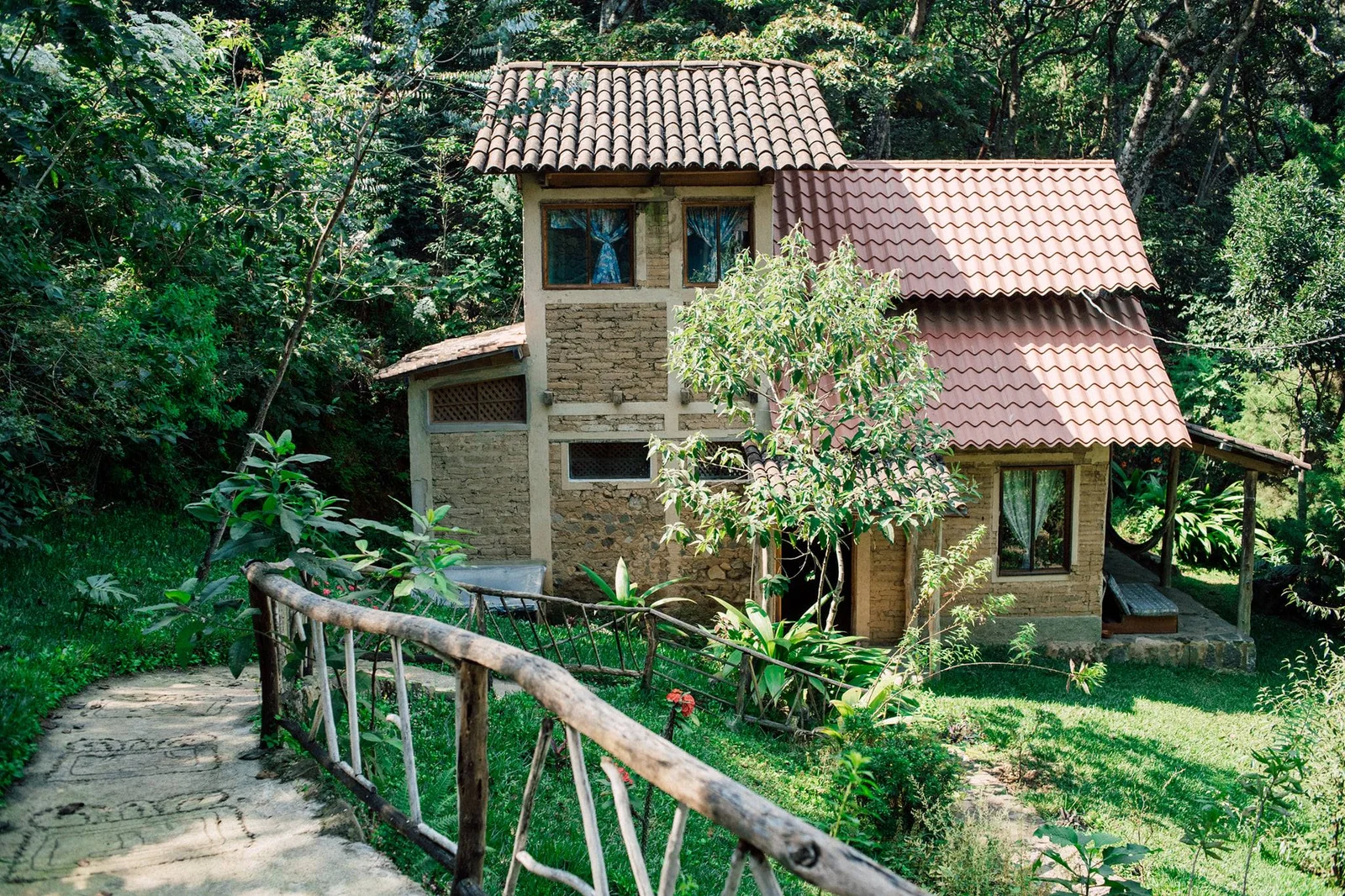
A rustic eco-hotel located on the shores of San Juan La Laguna, featuring stone architecture and beautiful gardens.
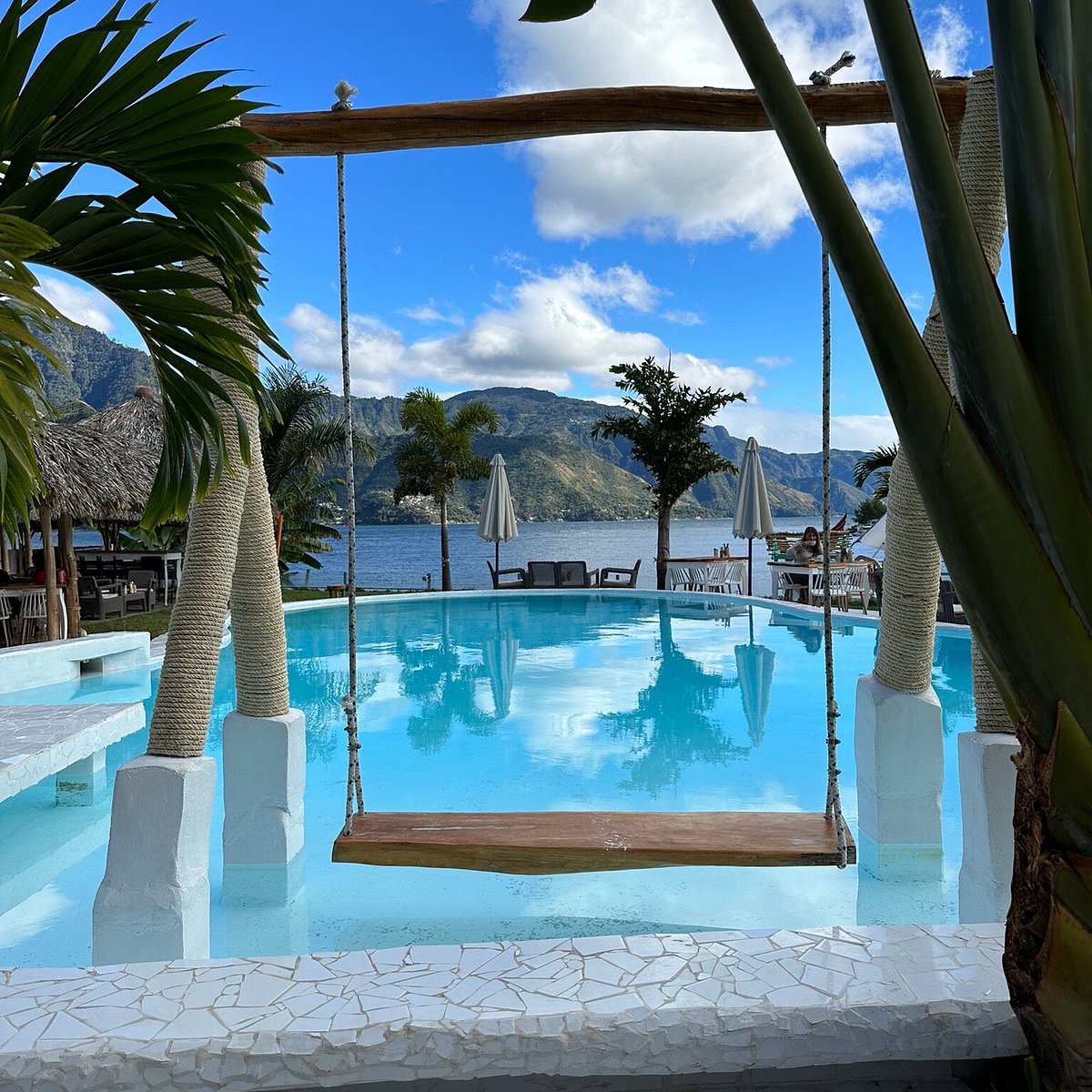
A popular resort in San Pedro La Laguna featuring an outdoor pool, lake views, and modern amenities.
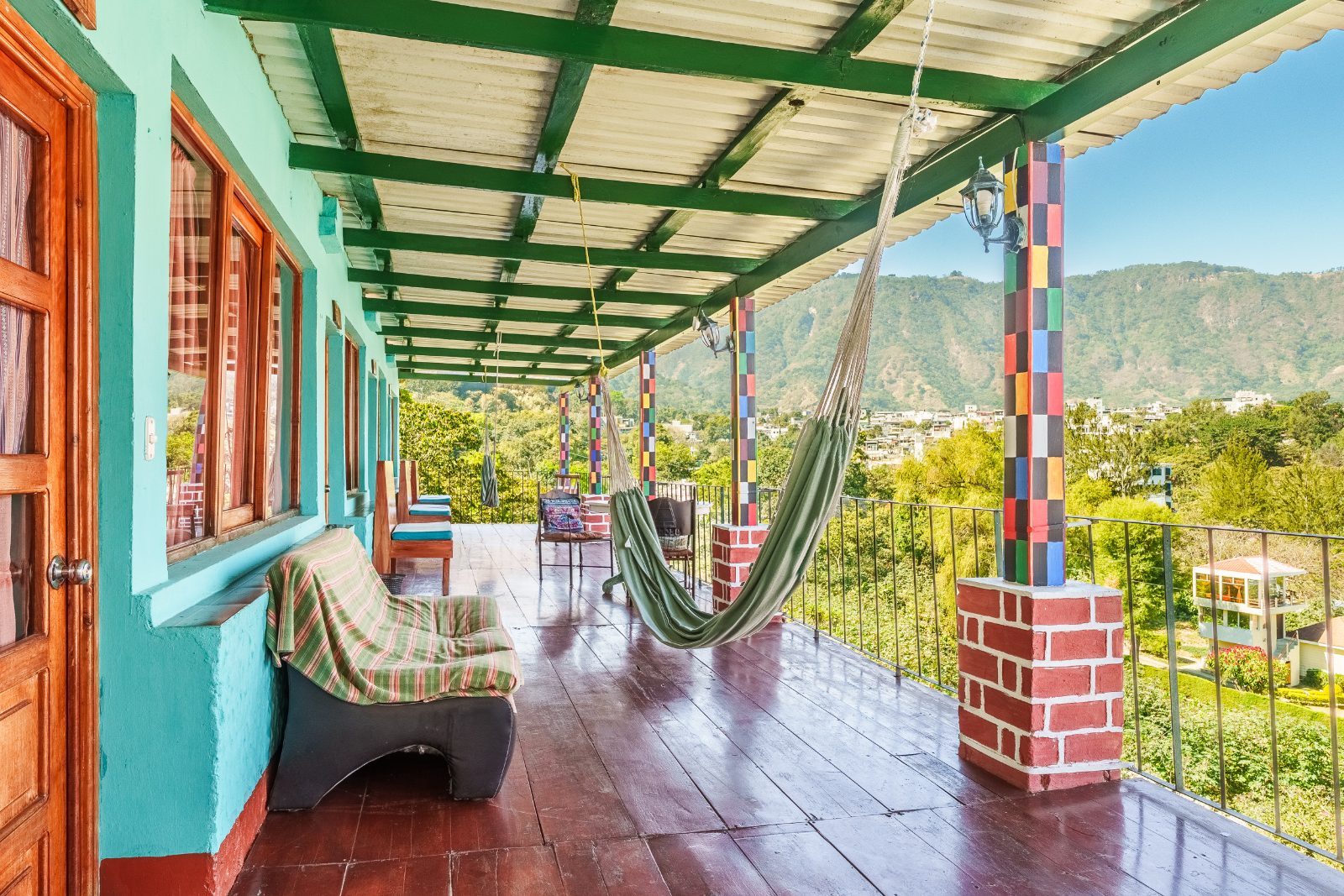
An eco-friendly hostel and restaurant offering wooden bungalows, vegetarian dining, and a quiet garden setting in San Juan.
Join thousands of happy travelers who have discovered this incredible experience
Book Your Experience Now